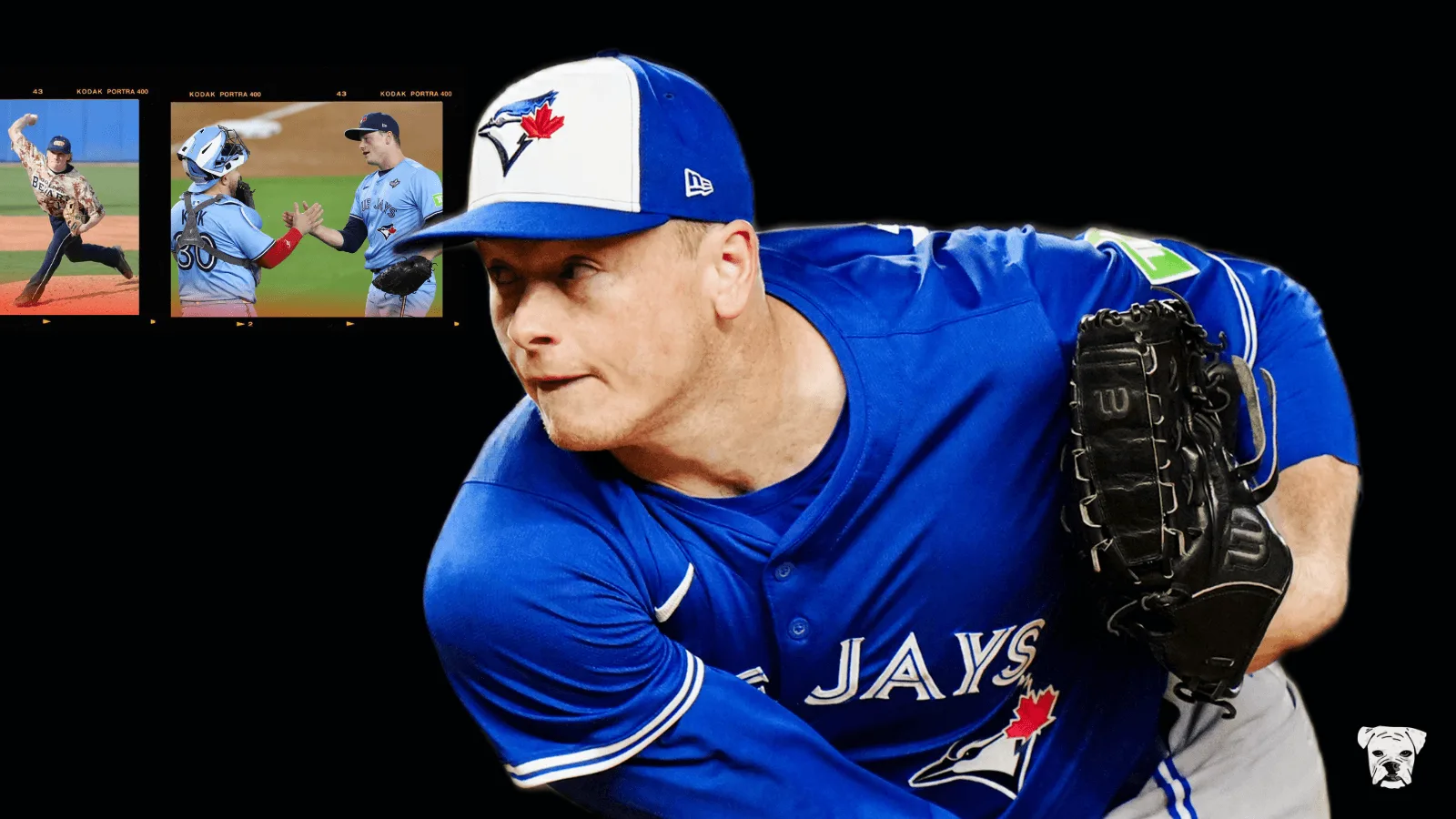
Just a few games into his pro baseball career, Louis Varland was facing a potential career-ending injury. As a late-round pick from a small D2 school, he understood the reality of his situation.
The clock was ticking, and he had to figure it out.
Fast.
Up until he was named to his first All-Star Game this month, very few people outside of Minnesota had ever heard of Louis Varland.
That’s because the right-hander’s improbable baseball journey started and stayed in The North Star State for most of his life.
As a pitcher at North High School (North Saint Paul, MN), he struggled with command. On a good day, his velocity topped out at 85 mph.
“Me and my brother [Gus] were both late bloomers, so we didn’t get a bunch of attraction [sic] to play at the next level.”
Louis didn’t receive offers to Division I powerhouses. In fact, he only had one offer above the Division III level, which came from Division II Concordia–St. Paul, the same school his older brother had just committed to a year earlier.
“At first, I did not want to follow my brother to Concordia,” he said in a 2021 podcast interview. “So I emailed all the other D2 teams in the conference so I could play against my brother eventually.”
And…crickets. Not a single coach replied.
“So then I contacted Concordia, and they welcomed me with open arms…the coaching staff, professors, teammates, strength coaches, the trainers, they were all great.”
As a private university with 5,800 students, the Concordia Golden Bears’ baseball program had not produced a single big leaguer since the 1940s.
“When I first recruited him, he was small,” said Golden Bears coach Mark “Lunch” McKenzie.
“When I saw him that summer, he had added 20, 25 pounds. I said, ‘Louie, what happened?’ He said, ‘I was a wrestler. I stopped cutting 20 pounds to get down to 160.’”
Varland started his college career as a reliever out of the bullpen, throwing 15 1⁄3 innings as a freshman with a 3.57 ERA.
“I came in [as] a thrower, but I didn’t know how to really pitch.”
With a commitment to steady improvement, he made a major leap as a sophomore, chucking 44 1⁄3 innings to the tune of a 1.41 ERA.
And after an All-American junior season, he popped onto the radar of major league scouts.
Still, when the 2019 MLB Draft rolled around in June, he had low expectations.
“I didn’t get one call…I didn’t hear anything; there was no rumor of when and where I should go,” he said.
“So it was all pretty much a surprise and…just pure joy.”
448 players were selected before the Minnesota Twins took Varland in the 15th round – one year and one round later than his older brother, Gus, who was selected by the Oakland A’s in 2018.
In his first year of rookie ball, Louis only recorded 8 2⁄3 innings before he experienced discomfort in his right elbow and forearm. Luckily, tests showed no signs of torn ligaments.
But the Twins spotted a flaw.
“I had ‘elbow climb’ that took my arm above my shoulder plane,” Varland told Twins Daily, describing his then-inefficient delivery, which was causing pain and restricting his velocity.
He’d have to work on lowering his arm slot to “throw cleaner and easier, and also harder.”
While baseball is a game of adjustments, it’s much easier said than done. Making the leap from D2 to pro ball is hard enough, but changing your entire pitching delivery? Not easy.
By the spring of 2020, with his second pro season around the corner, Varland was finally getting comfortable with his newer release point.
Then, the minor league season was canceled due to the pandemic.
As a relatively unknown, late-round draft pick with less than 9 professional innings under his belt, Varland was in a tough spot. He wasn’t on any top prospect lists, and hundreds of minor leaguers were losing their jobs – not just for the year, but for good.
But Louis never lost hope.
“If a Varland tells you they can do something, they will do it,” said Cole Hutchens, one of the brothers’ high school coaches.
“If you tell them they can’t do something, they’ll still find a way to do it.”
And in 2021, Louis did it.
With his refined delivery and mature approach, he went 10-4 with a stellar 2.10 ERA and 142 strikeouts across 103 innings, earning the Twins’ 2021 Minor League Pitcher of the Year honors.
He moved up to Double-A then Triple-A in 2022, posting an 8-5 record with a combined 3.06 ERA across both levels.
Then, on Labor Day of 2022, Louis was sitting in the back of the team bus, playing around on an iPad, when his coach’s voice came over the loudspeaker.
“Hey, got a real quick announcement…something pretty exciting.”
“Louie Varland, you’re going to the f***in’ big leagues.”
It was the moment he spent his whole life dreaming about.
He’d make his MLB debut two days later at Yankee Stadium.
“It was a complete surprise,” Varland told KSTP Sports. “I was not expecting it at all.”
On the 13th pitch of his MLB debut, he struck out 2022 American League MVP Aaron Judge on a changeup at the bottom of the zone. Quite a way to ease the nerves.
All in all, the righty fired 5 1⁄3 innings and struck out 7 Yankee hitters, allowing just 2 earned runs in his first big league start.
For a time, he looked to be a part of the Twins’ future plans. A promising young arm with major potential.
Up to that point, his journey hadn’t taken him very far from home. It’s only a 17-mile trek from North High School’s varsity baseball field to the Twins’ Target Field.
In three and a half years, he went from Division II through the ranks of the minor leagues, all the way to an MLB mound.
But then, things went south. Quickly.
He started the 2023 season back at the Triple-A level. Then, in limited MLB action, he was considerably less effective than his rookie campaign. His ERA ballooned from 3.81 to 4.63. He gave up 16 home runs in 17 games.
2024 was even worse. In a disastrous 7 starts, he posted a 0–6 record alongside a 7.61 ERA. He was 26, a few years older than the rising prospects looming in the minors, threatening to replace him.
And replace him, they did. Major League Baseball is a business, after all.
The Twins sent Louis down to the minors several times throughout the year, trying to iron things out, before officially moving him to the bullpen with a few weeks left in the season.
Across the 2023 and ’24 seasons, Varland gave up 77 earned runs, including 28 homers, in 33 games. The average baseball fan probably would have written him off, assuming he’d become a “Quad-A” player and spend years shuffling through different organizations before fizzling out.
After all, baseball history is littered with former top prospects who just never lived up to the hype.
Who would’ve guessed that just two years later, he’d be named to his first All-Star Game?
An athletic career, like life itself, is rarely linear. There are plenty of ups and downs. Good times and bad.
It’s all about staying the course, putting in the work, and trusting that someday it will pay off.
2025 was Louis’ first full season as a reliever, and it was just what he needed.
No longer did he have to pace himself and think about “leaving something in the tank” to cover 6 or 7 innings as a starter. By removing that element from his game and getting into the mindset of a relief pitcher, his fastball velocity climbed from 96 to 98 miles per hour.
In his first 51 games, he struck out 47 batters and allowed just 11 runs. He was a completely different pitcher.
“I’ve found some success, some failures,” he said then. “But it’s been fun. It’s fun coming out of the pen.”
Then, at the trade deadline in July, the Minnesota Twins shipped off an unprecedented 11 major league players in 96 hours.
Louis was one of them.
A mere footnote amid the headline-grabbing moves, he was dealt to Toronto alongside teammate Ty France for two prospects. Moving up to Canada was a big shakeup for a guy who spent his entire baseball life – from tee ball to MLB – in one state.
The trade didn’t generate a ton of excitement at first, but Blue Jays fans saw his potential when October rolled around.
Varland appeared in 15 playoff games for the Jays, setting an MLB record for appearances by a pitcher in a single postseason.
There were some good outings, and a few blow-ups. Entering in high-leverage spots, he struck out some big hitters, but also allowed a few game-altering homers.
While Louis was lights out in Games 6 and 7, Toronto fell short to the Dodgers in the World Series. Every pitch was a learning experience.
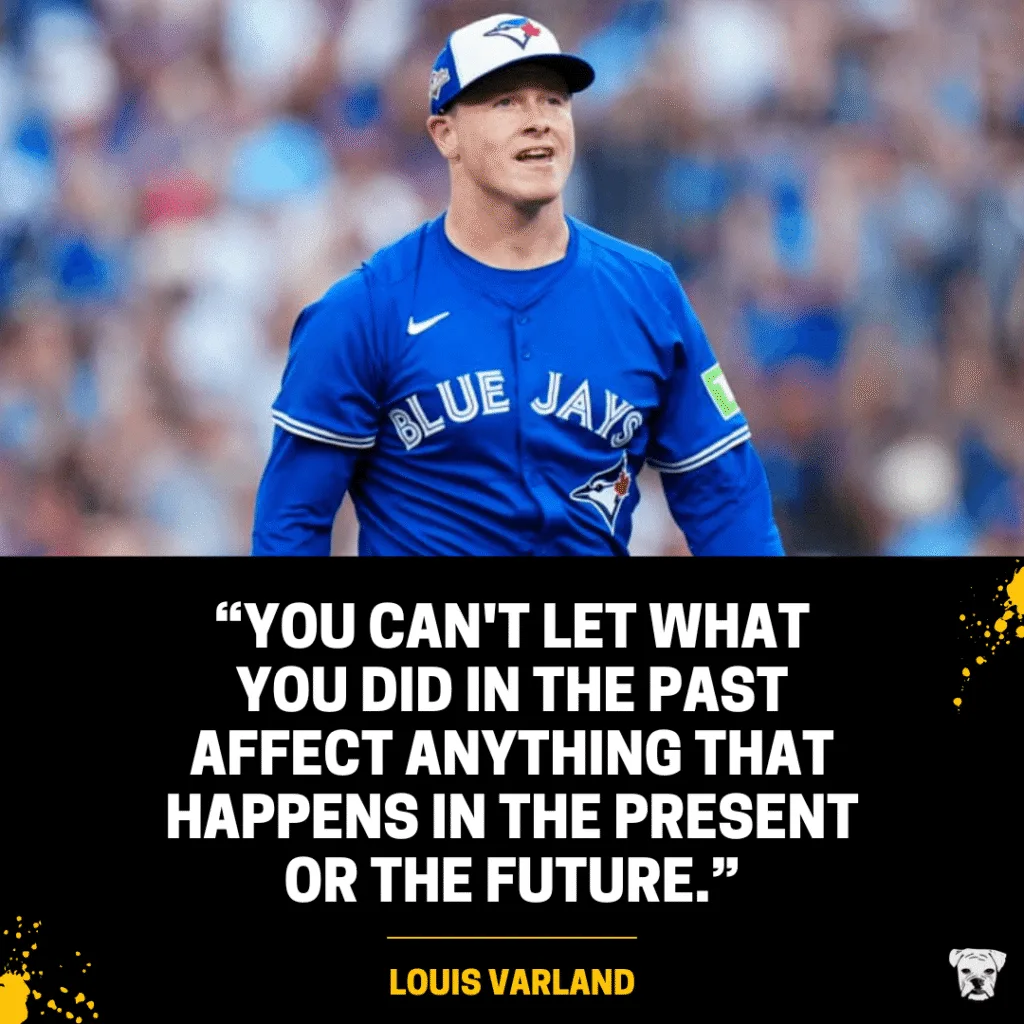
“You can’t let what you did in the past affect anything that happens in the present or the future,” he told MLB.com’s Michael Clair.
“[I know I’m] going to be pitching again, so I might as well have a good attitude towards it, rather than moping around from the previous outing.”
That newfound mindset laid the foundation for a historic 2026.
Through his first 48 innings of the year, Varland has struck out 66 batters and surrendered just 5 earned runs. His ridiculous 0.94 ERA places him among the upper echelon of pitchers in the majors, and earned him the first All-Star nod of his career.
Per Keegan Matheson, he’s on a historic path, “one of the best we’ve ever seen from a reliever in Toronto.”
“If Varland keeps this up, you’ll only need one hand to count those who have done it better in this city.”
The Jays’ closer hasn’t let the success go to his head. In his heart, he’ll always be the same humble kid from North Saint Paul.
Every offseason, Louis returns home to help his dad with their family business: Varland Drywall. He’s been doing it since middle school.
“Nothing’s changed,” said his dad, Wade Varland.
“He’s not really big league around here…he’s still Louie around here.”
The first-time MLB All-Star doesn’t take it for granted, either.
“Having your dad as the boss is the best thing ever…I’m blessed to see my dad every day.”
If you enjoy stories like this, you’ll love our Underdog Newsletter. Join thousands of subscribers below 👇