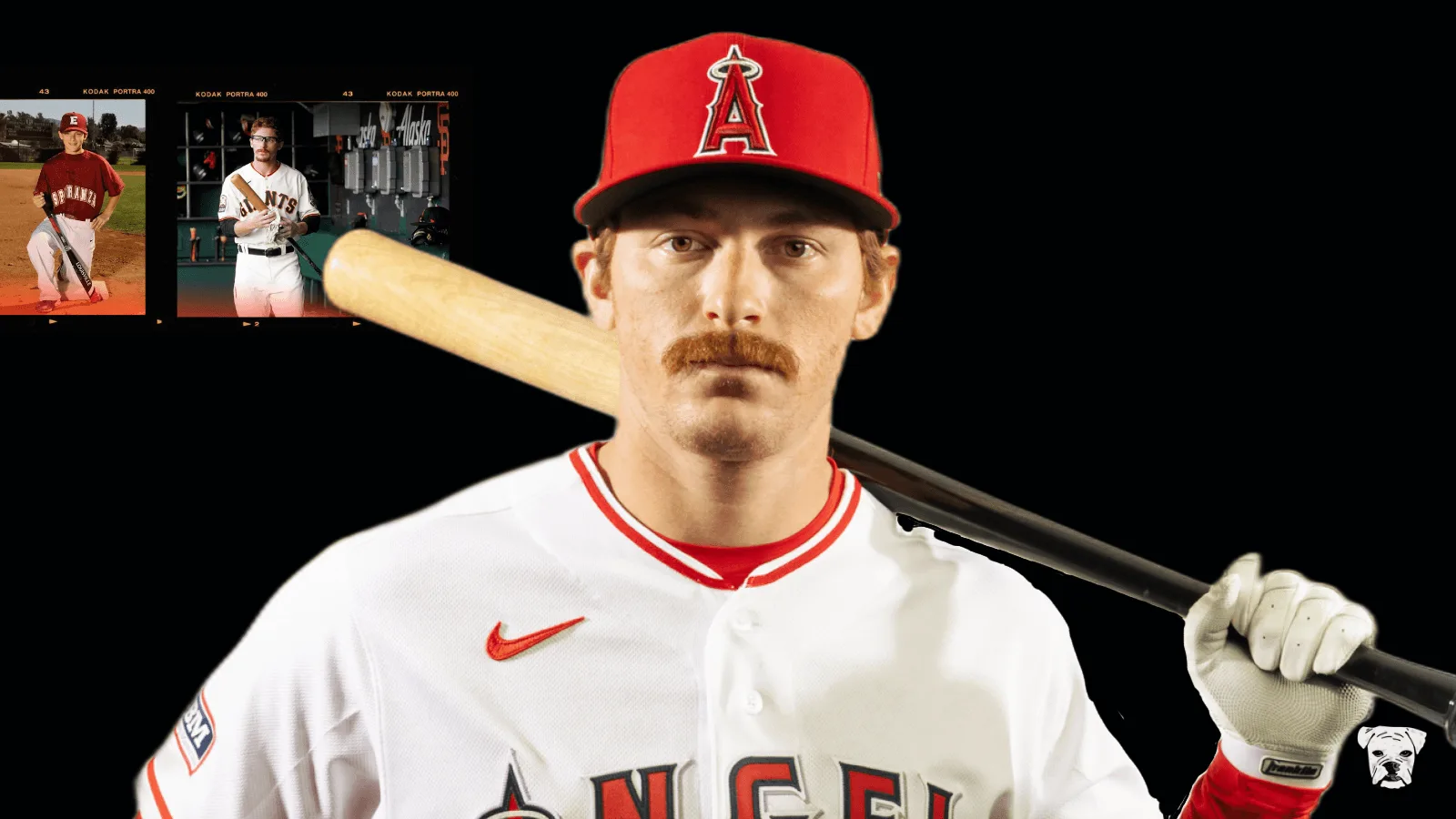
Wade Meckler had a pit in his stomach. It was November 2019 when the sophomore ballplayer was summoned to the head coach’s office.
“We want to be honest here…” the coach started.
“We don’t want to waste your time anymore.”
The pit grew deeper. This could not be happening. Not after all the work it had taken to reach this point.
Real college baseball. An elite Division 1 program.
His lifelong dream, slowly being pulled out of his grip with every sentence the coach spoke.
“…we just don’t see an opportunity for you to get on the field this year – or in the future.”
As an outsider looking in on that moment, few would’ve imagined that this college sophomore would ever play baseball again.
Let alone at the same school, for the same coach.
What were the odds that this same kid would end up on an MLB roster, for the very same team he grew up rooting for?
No one, even the young man himself, could’ve predicted the way things have worked out.
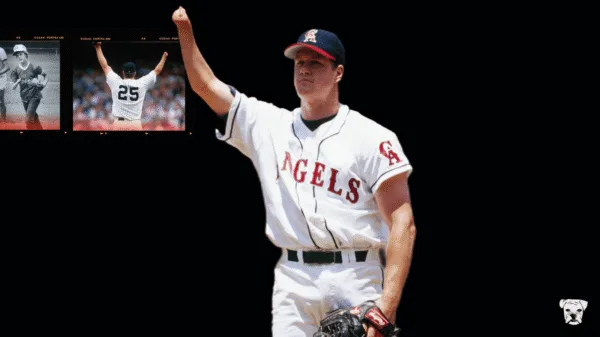
Wade Meckler was born in Anaheim, “probably 15, 20 minutes from Angel Stadium.”
From the time he was 7 or 8 years old, he was a huge Angels fan.
Angel Stadium was the setting of several of his birthday parties. His bedroom was decked out in Angels memorabilia. And he went to 10 or 15 games a year, looking up to players like 5’8” Chone Figgins and 5’10” Erick Aybar.
He dreamed of one day wearing the same red and white uniform, playing under the lights in front of thousands of roaring fans.
But reality didn’t exactly match up.
As a kid, he was tiny. One doctor said he had a “constitutional growth delay” – meaning he was likely to start puberty later than his peers.
In other words, he’d grow. Eventually.
At 9 years old, while walking up to Little League baseball tryouts, he turned to the coach and said, “I hope you pick me. This is like the biggest day of my life.”
It wasn’t something the average 9-year-old would say, especially since the coach was his own father.
“He doesn’t realize that, of course, I’m going to pick my own son,” Brian Meckler told Kerry Eggers.
“At that moment, I realized how serious he was. He tried out as hard as he could that day. He thought if he wasn’t good enough, I probably wouldn’t pick him for my team.”
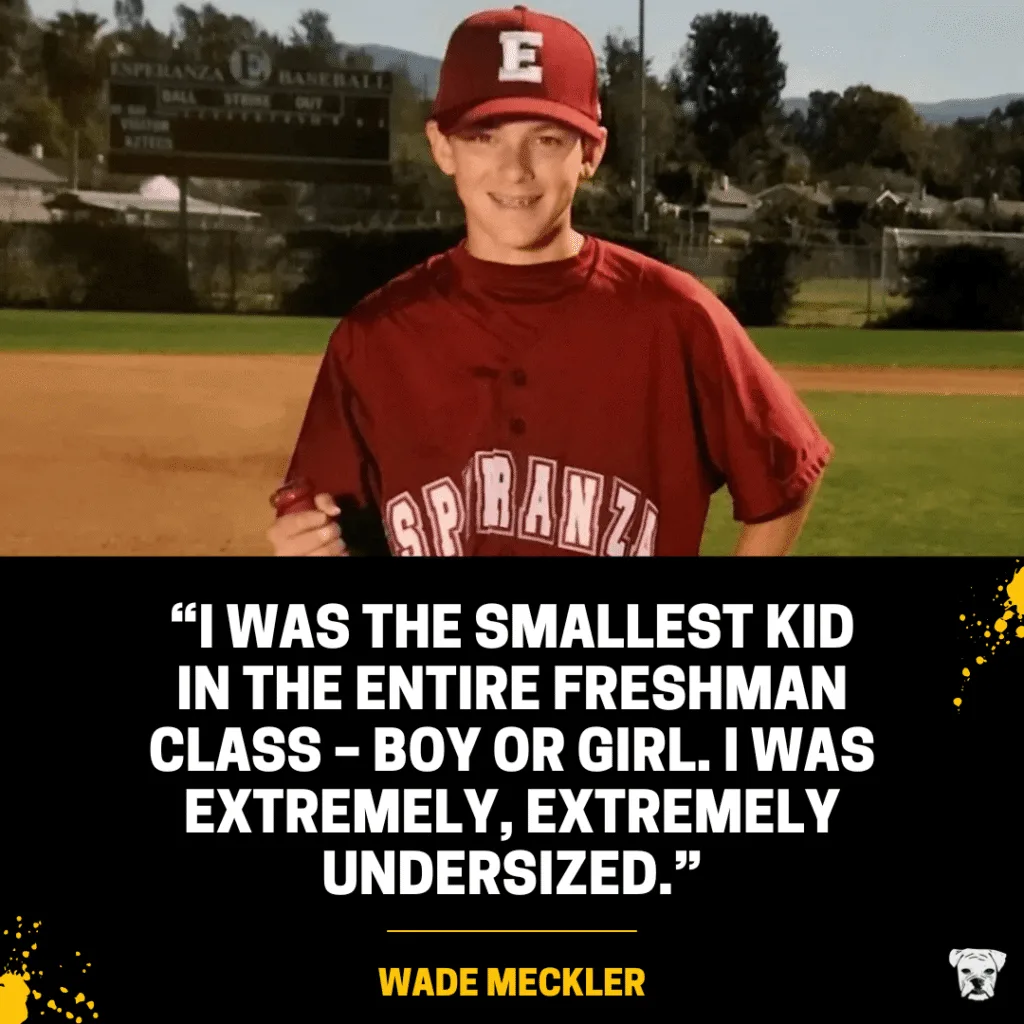
By the time high school rolled around, Wade was only 4 feet 10 inches tall and weighed just 75 pounds.
“I was the smallest kid in the entire freshman class – boy or girl,” he said. “I was extremely, extremely undersized.”
It took everything in his power to make the freshman baseball team. From there, his career followed a steady, gradual progression.
There was no rapid growth spurt. No breakout season. No fundamental transformation that sparked his development.
Just good, old-fashioned, relentless hard work.
“My dad always told me, ‘You’re half the size of everyone else, so you’re going to have to play twice as hard as everyone else and work twice as hard as everyone else to be just as good.’ So I did. I outworked, outplayed, and outgrinded everyone else. As cliché as the word grind is now, that’s how it was.”
As a 100-pound sophomore, he made the JV squad.
The next year, he did enough to make the varsity team. But not as a regular.
“I was almost like a fourth outfielder type,” he told Trent Rush on the Under the Halo Podcast. “I would start a few games, then I would be on the bench a few games, and I wasn’t playing every day.”
Yet he made the most of every plate appearance, batting .301 with two doubles and 11 stolen bases.
Those numbers gave him tangible proof that he belonged. Competing at a high level was no longer just an idea in his mind. And that experience opened the door to a potential future in baseball.
Finding an opportunity to play in college was still an uphill battle. Sure, he posted good numbers as a first-year varsity player. But he was still a part-timer. And his size was still a big question mark.
So, he decided to control what he could.
“I started looking for ways to eliminate competition,” he said. “I took it upon myself to get grades others couldn’t and wouldn’t get, because they didn’t work as hard in the classroom. I targeted the Ivy League schools really hard.”
He retook the SAT as many times as he needed to reach the lofty thresholds of the Ivies. On the sixth or seventh try, he got there, scoring a 1470.
On top of his 4.4 GPA, the academic side was completely taken care of. And on the field, he was getting real looks from Division 1 coaches.
But ultimately, Harvard passed. So did Yale and Georgetown.
“I got the grades, I had the SAT score,” he said. “It just came down to, there wasn’t a spot on the baseball team for me.”
The summer before his senior year, his options were shrinking. Despite all of his work on the field and in the classroom, Meckler had a total of zero offers from 4-year programs.
No Division 1 or Division 2 offers. And due to NCAA rules, Division 3 teams couldn’t offer him an athletic scholarship even if they wanted to.
But later that summer, at a travel tournament in Arizona, he finally caught a break.
A man named Scottie Tenen, who helped connect high school players with college recruiters, spotted Meckler from the stands. He recognized the scrawny redhead from his recruiting video the summer before, and he fell in love with his grit.
Tenen just so happened to be sitting next to Pat Bailey, the associate head coach of the Oregon State Beavers.
They watched as Meckler went hitless at the plate, but showed hustle and heads-up play on the base paths.
On what appeared to be a routine infield fly, he surprised everyone by tagging up from third and dashing for home. He beat the throw by a split-second to score the run.
In that moment, Bailey turned to Tenen and said, “That kid’s a Beav. Get him to me.”
There wasn’t any kind of scholarship offer on the table, but Wade could come to Oregon State as a preferred walk-on.
In the meantime, Meckler had one more year of high school baseball left. By that point, he’d grown to about 5’8” and 145 pounds. He became an everyday player on the varsity team, and he hit .375.
That same spring, he watched from home as Oregon State reached the pinnacle, beating Arkansas to win the College World Series. Six of their players were selected in that summer’s MLB Draft – three in the first round.
Walking on to a Division 1 baseball team was hard enough. But trying to make the team that just reached the top of the college baseball world? Extremely difficult. Especially for a guy who barely weighed 150 pounds.
“I just felt like…kind of [the] same thing as high school, if I do all the little things as well as I can, I was gonna give myself the best shot,” he said.
“If I don’t make that team, I’m back where I started anyways. So, I ran the bases hard. I tried to show off my speed, tried to play good defense…I wasn’t striking out; I was walking.”
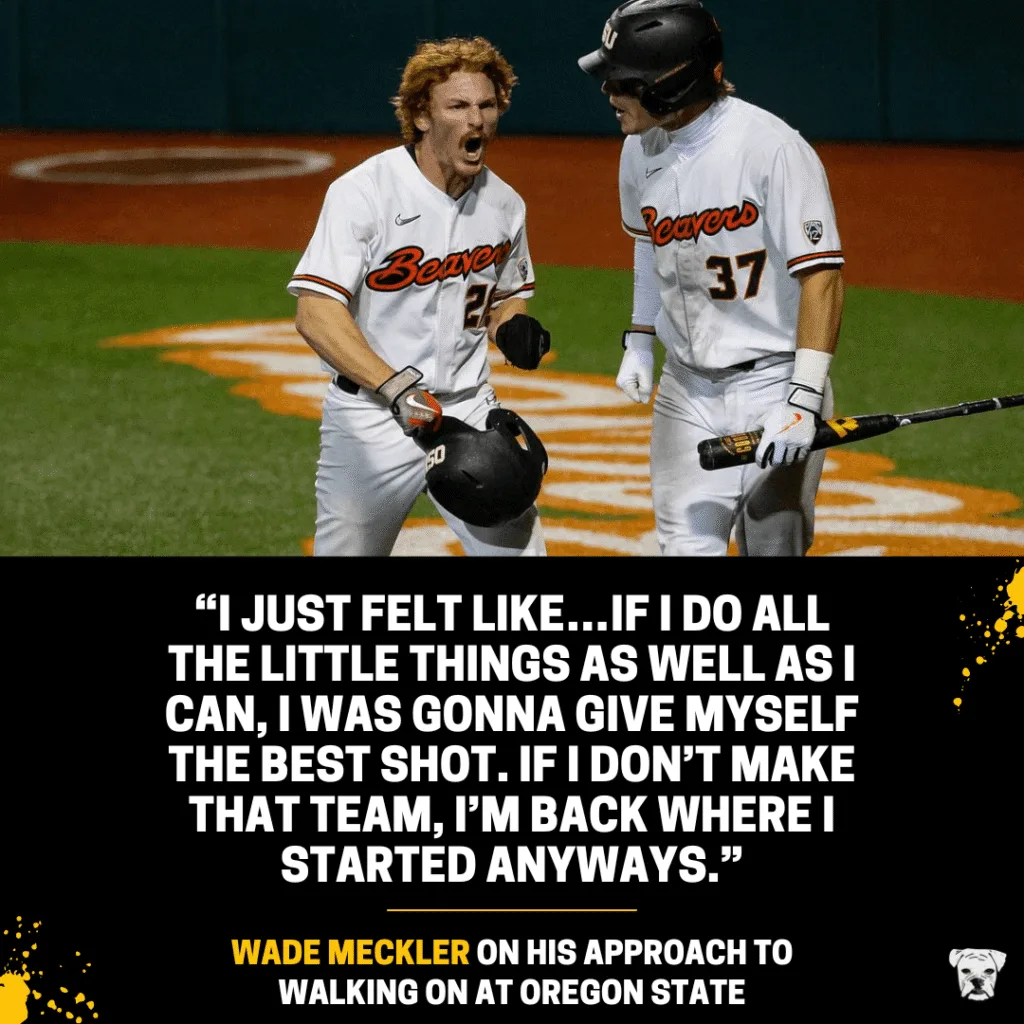
The coaching staff saw his potential, and he made the team as a freshman walk-on.
That season, he was used mostly as a pinch-runner and late-game defensive replacement. A useful sub at the end of the bench.
In sporadic game action, he collected only one hit in 10 at-bats.
After the season, the Beavers hired a new head coach, Mitch Canham. Pat Bailey, the man who recruited Wade, stayed on the staff, but moved into a supporting role.
So, going into the fall of his sophomore year, Meckler would have to start from scratch to prove he belonged.
By the end of the fall, Canham wasn’t so sure he did.
“It was a rough conversation,” Wade said of their meeting in November of 2019.
“He sits me down, and he says, ‘We want to be honest here; we don’t want to waste your time anymore. We like you and want you to have an opportunity to play somewhere, so we’re letting you know right now that you’re probably not going to make the team this year. If you want to transfer or pursue other options, there’s no hard feelings, and we’re not going to take it personally. But we just don’t see an opportunity for you to get on the field this year – or in the future.’”
At the lowest point of his playing career, he was facing a critical decision.
So he took the night to think it over. His mind raced as different possibilities entered his mind.
“I was worried, obviously. I had that chip on my shoulder at the time where that thought [of quitting baseball] crossed my mind. But I was more like, ‘I’m gonna show them.’ I considered transferring…considered going to junior college.”
The next day, he requested another meeting with Canham.
“I’m not going anywhere,” Meckler told him. “You need me, and I’m going to prove it.”
In his mind, if he wasn’t good enough to play at Oregon State, he would never make it to the big leagues.
So he kept working hard throughout the winter. And right before the season, it looked like it paid off.
A week before the first game of 2020, the Beavers cut a scholarship player and told Wade that he’d be traveling with the team for their spring trip to Arizona.
But his excitement was short-lived. Hours before the team’s departure, the coaching staff was informed of an NCAA restriction. Since they’d cut a scholarship player, they’d have to forfeit that roster spot.
The 35th spot – Wade’s spot on the team – no longer existed.
“So technically, I got cut twice in the same year,” he said.
Then, 14 games into the year, the pandemic wiped out the entire NCAA baseball season. Suddenly, his teammates were in the same boat as him.
Some of his best friends on the team rented a house in town. Wade moved into their attic.
“COVID kind of saved my career,” he said. “I was around the starters every day, picking their brains, hitting with them, working out together.”
With no games or travel to worry about, they lifted weights and hit in the cages for hours every day.
Wade used those months to rebuild his swing. His attention to detail was, and still is, meticulous. According to Giants Baseball Insider, “he has over 10 pages of notes on his phone about the ideal mechanics of his swing.”
It started with an observation. The velocity in the Pac-12 was no joke, and Wade realized he was late on almost every pitch.
“I worked on starting my load super early, super slow,” he said. “Where I’m building up energy early and going from there… I started thinking about loading into my back hip instead of pushing off my back foot. Allowing that tension to pull me forward.”
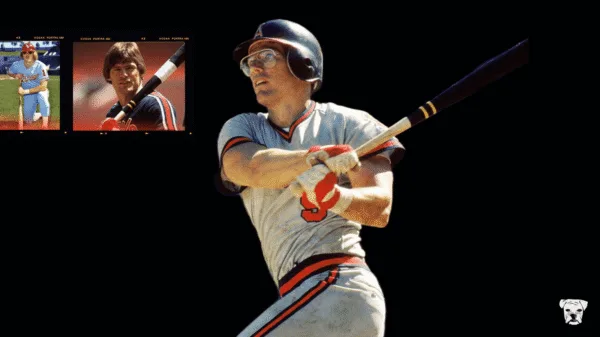
He even started wearing glasses at the plate. Not because he needed them, but because they gave him an edge.
“I have a bit better than 20/20 vision without the glasses,” he explained in a Reddit response, “but the glasses really just take it over the edge in terms of my ability to see sharpness/spin.”
By the time his junior year came and the COVID restrictions were lifted, he was a completely different hitter.
In the spring of 2021, he made the cut as a platoon outfielder.
Early in the season, he hurt his hamstring trying to steal a base. Did it bother him? Yes. Was he going to complain about it? Heck no.
While the injury cut into his speed, he made the most of every ounce of playing time. He had some big moments, packed with a lot of firsts.
In a February game against Gonzaga, he entered as a pinch hitter and smacked an RBI double. A week later, at Grand Canyon, he posted the first two-hit game of his career.
Then, on March 14th, he slugged his first career home run, a two-run shot in the fifth inning against Oregon. It was the decisive blow in a 3-1 victory.
Across 49 games, he made 34 starts and batted .303 with 10 doubles and 4 homers.
He not only earned the respect of his teammates, but also the coach who’d cut him a year earlier.
Later on, Mitch Canham called Meckler, “a guy that’s as tough as they come. A guy that’s resilient, a guy that’s a hard worker, a guy that’s a fighter to the end. Life is going to be tough. But it’s how you respond to the tough times, what you do when people tell you that you can’t, that makes you who you are.”
“20 or 30 years from now,” Canham said, “I’m still going to be telling stories about Wade Meckler and his incredible fight.”
The next season, Wade became a full-time starter and started posting video-game-like numbers.
In 66 games, he hit .347 with 23 doubles and 12 stolen bases. He walked (53) more than he struck out (49), and was named to the All-Pac-12 First Team.
His lifelong dream became a reality when the San Francisco Giants drafted him in the 8th round later that summer.
The team’s scouting director Michael Holmes said, “We were really drawn to the competitor, the individual; he plays with a chip on the shoulder every time he takes the field.”
Wade signed for a below-slot bonus that was just enough to pay off his tuition, since he never received a penny of scholarship money in college.
It was the perfect metaphor: nothing was ever handed to him.
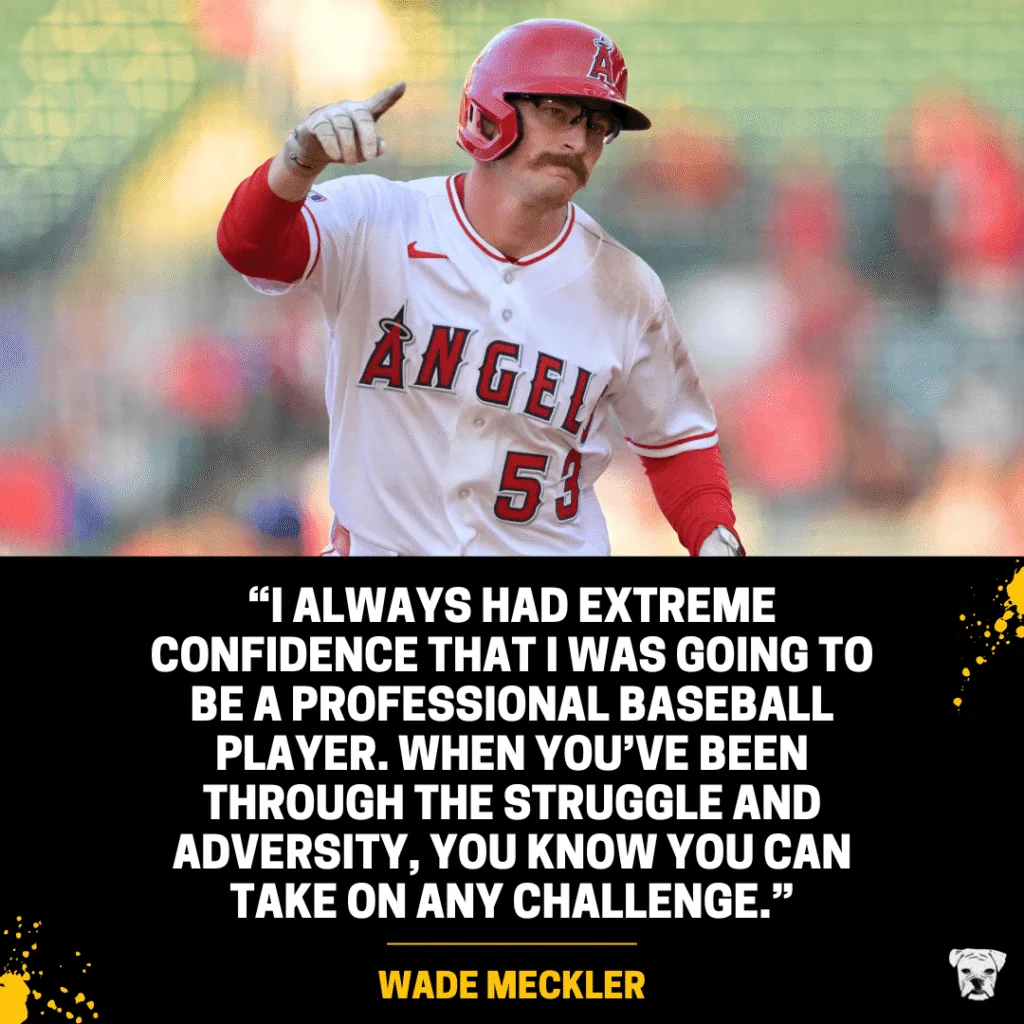
“I always had extreme confidence that I was going to be a professional baseball player,” Meckler said. “When you’ve been through the struggle and adversity, you know you can take on any challenge.”
Pro ball is a step above college – even for top D1 players. Usually there’s an adjustment period. But in his first 23 games of pro baseball, Meckler’s numbers actually improved.
Across rookie ball and Low-A, he hit .367 with 11 doubles and posted a .500 on-base percentage.
In 2023, he rose from High-A to Triple-A, putting up a combined .371 batting average and .456 on-base percentage.
On August 14th, he got the call to make his MLB debut with the Giants.
But it turned out to be a “cup of coffee”. He played in 20 games before being sent back down.
Ultimately, Wade spent the next two full seasons battling injuries that prevented him from reaching the big leagues again. Then, right before Christmas of 2025, the Giants designated him for assignment.
He spent the holidays facing an uncertain future.
Then, a week into the new year, the Angels claimed him off waivers.
“I was excited,” Meckler said.
“Obviously, it was really cool to have an opportunity to play for your favorite team growing up – your childhood team.”
After beginning the 2026 season in Double-A, he once again made quick work of minor league pitching.
On May 22nd, he earned his first big league call-up in three years. And on the first pitch of his first at-bat for the team he grew up rooting for, he launched a three-run home run into the right-field seats.
The stadium erupted as he rounded the bases – 32,000 Angels fans on their feet, his parents right alongside them in the chaos of the crowd.
Every kid imagines that very moment when they’re playing wiffle ball in their backyard. Wade Meckler lived it.
But he will never let himself get too high or too low.
“The game’s fickle…you have to have self-belief that, ‘Yeah, I am here for a reason, and I am one of the best players in the world.’ But you can’t get caught up in that. The second that you start thinking that you’re better than you are, or you’re worse than you are, the game will punish you.”
“You do have to have a little bit of respect for how difficult the game is, but also have the confidence to know that you do belong up here.”
He carried the momentum from that first swing through mid-July, when he entered the All-Star break slashing .307/.376/.417 with 8 doubles and 2 homers.
With some time off in the midst of a breakout season, it would make sense to take a step back and reflect on how far he’s come. Or look ahead to the future.
But that’s not the mentality that got Wade Meckler here.
“Obviously, there are dreams and goals,” Wade said. “I’d love to win a World Series, I’d love to be an All-Star, I’d love to play 10 years in the big leagues. But those are all macro things that you take care of by taking care of the day.”
“Baseball is an accumulation of 162 games, and they’re each individual events. So, if you take care of each game, then good things are gonna happen…I try to just think about that day and the game that I’m playing in.”
Want more underdog stories like this every Sunday morning? Join 30,000 readers on my free Underdog Newsletter 👇