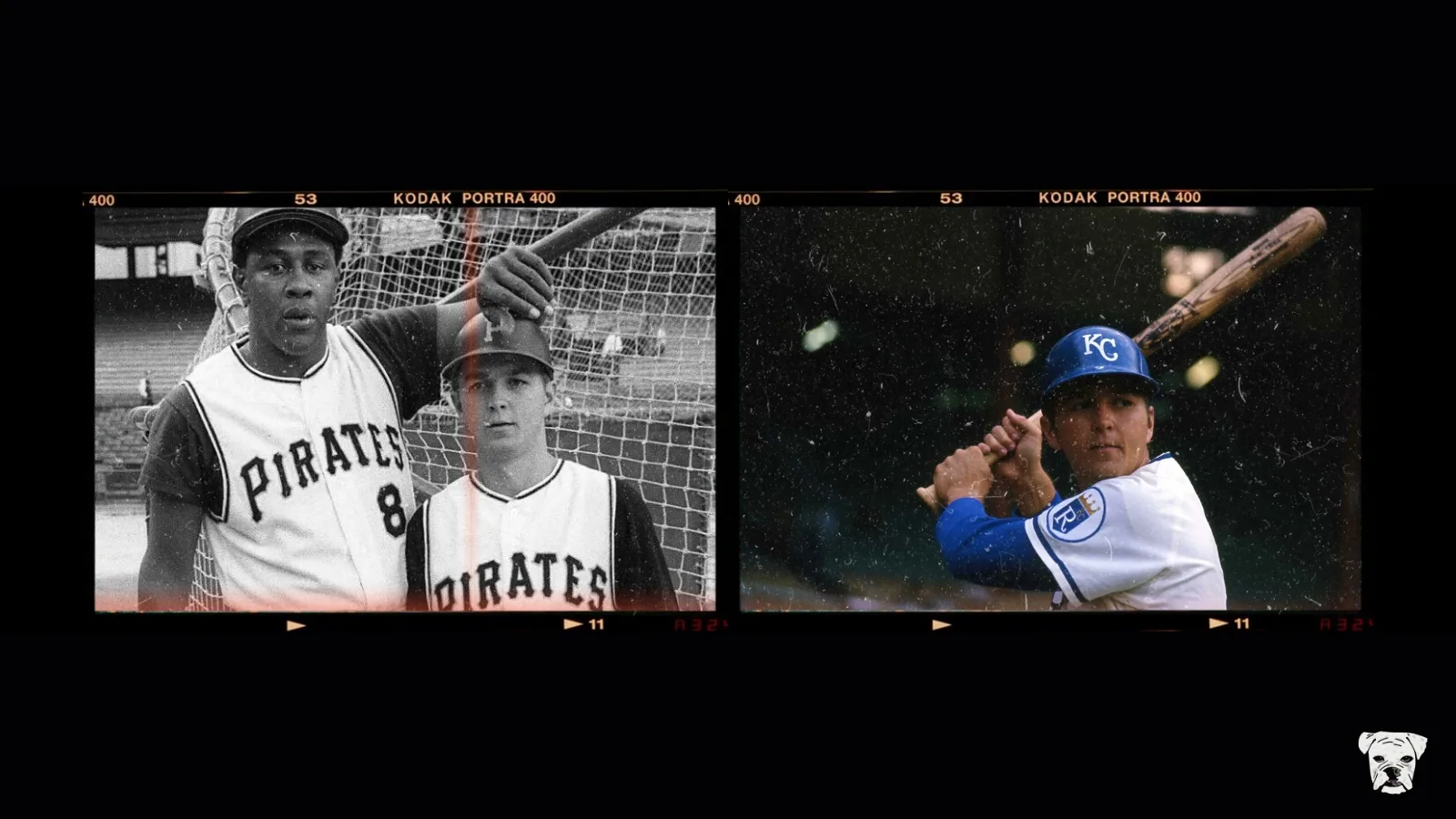
Finally, he caught a break.
But just as a window was opening, it got slammed shut.
His mother called him and said, “You need to come home.”
He’d gotten a letter in the mail. The kind you can’t avoid.
Freddie Patek was born in Oklahoma City in 1944.
A few weeks later, his dad went overseas to fight in World War II, so his mother took the kids and moved back to her hometown in Texas.
Freddie learned the meaning of hard work from an early age.
At 7 years old, he helped his uncle Joe with his bread truck. He’d wake up at 4 AM every morning to stack bread trays for 12 hours.
The pay was only $2 per day (about $24 in today’s dollars).
When his dad got back from the war, he opened a butcher shop.
Freddie pitched in there too, making hamburger meat in the morning and stuffing sausages in the afternoon.
After the work day was over, he’d catch a ride to play sandlot baseball with the big kids.
Freddie was always small for his age, but he was “better than all of them.”
That trend continued from Little League to American Legion and well into his teenage years.
“Being small was something I always had to overcome,” he said.
“Even when I was really, really young, I heard that all the time. ‘Well, you’re too little, you can’t play, you’re not going to be good enough.’”
By high school, Patek had become a five-tool player. Still small, sure, but productive on the field.
After making the Varsity team for the first time as a junior, he earned both all-district and all-state honors.
But when a new coach entered the fold the next year, he took one look at the 5’4” infielder and told him not to bother showing up to the tryout.
“I couldn’t even make my high school team because I was so small,” Patek said in the book, The Pastime in the Seventies: Oral Histories of 16 Major Leaguers.
In a big state like Texas, a diminutive ballplayer without a team to play for was virtually invisible to scouts.
Even still, Patek’s junior season was good enough to keep him on the radar of several college coaches.
But after graduation, he decided to get a job in Houston instead.

That summer, he was asked to participate in an invite-only All-Star tournament pitting the best ballplayers in Texas against the best from New York.
Freddie did his thing in the tournament and grabbed the attention of Lou Carnesecca, the coach for St. John’s University.
Carnesecca offered him a scholarship, but the timing wasn’t right.
In fact, the timing was terrible.
“I wasn’t going to go to New York,” Freddie said.
“My mom called me, she said, ‘You need to come home…You got your draft induction notice.’”
This was the early ‘60s, right in the middle of the Vietnam War.
The U.S. government would pick dates on a calendar at random, and men between the ages of 18 and 26 with those birthdays were drafted in the sequence the dates were selected.
Freddie was one of them.
He’d only been out of high school for six months when that draft letter came.
But when he arrived at Randolph Air Force Base in San Antonio, he saw something he didn’t expect.
A baseball field.
“A few guys in the Air Force that I had known and played against were organizing a baseball team. There were ex-professional guys from all over the country,” Patek said.
“We played a 140-game schedule every year…It was the best thing that could have happened to me because the scouts got a chance to see that I could play…That was probably better for me because I matured a lot quicker…Had I gone on to college out of high school and played 30, 40, or 50 games a year, I probably would have never made it.”
While serving his country, Freddie kept his game sharp.
Those long seasons gave him more chances to catch the eye of pro scouts, who were eventually able to look past his size and see what he truly was: a great baseball player.
On June 8th, 1965, Freddie’s name was called in a different draft – the one kids dream about – when the Pittsburgh Pirates took him in the 22nd round.
That summer, Patek’s dad got sick, and the Air Force gave him a hardship discharge.
The Pirates let Freddie take care of his ailing father for the rest of the year before kicking off his professional career the following spring.
“[Growing up], the Yankees were my team, and my dad was a Brooklyn Dodgers fan. We used to go at it like that,” Freddie said.
“Bill Mazeroski was one of my favorite players, and when I signed with the Pirates, two years later, I was playing with him.”
When Freddie finally reported to the Pirates, he was a little bit anxious.
“I remember when I got off the plane at Daytona Beach after signing, [Pirates scout] Bob Zuk reported that I was 5-foot-7 and weighed 170 pounds. I never weighed 170 pounds in my life! Here I am, 5-foot-4 and about 120 pounds soaking wet.”
“[Pirates GM] Joe O’Toole looked at the report and looked at me. This was midnight in Daytona Beach, the first day of spring training, and Joe said, ‘That son of a bitch did it to us again!’ I’m standing there, shaking and thinking, ‘Oh, no.’”
But Patek changed their minds by tearing up the minor leagues.
In his first pro season, he made the Single-A all-star team and earned a promotion to Triple-A Columbus the very next day.
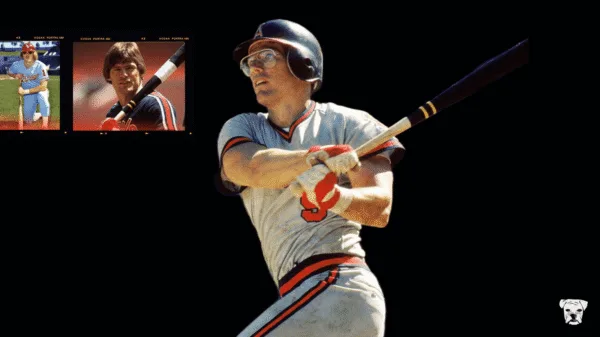
The following year, he stole 42 bases for Columbus, which earned him the nickname “The Flying Flea.”
The Pirates called him up to the big leagues in June of 1968, where he was met with more uncertainty.
When he walked into the Pittsburgh clubhouse for his MLB debut, manager Larry Shepherd asked, “You’re not the damn guy they sent me to play shortstop, are you?”
At the time, Freddie was the smallest player in the majors – 5’5” and 148 pounds. His cleats were a size 6.
When a reporter asked him about it, his reply was perfect.
“I’d rather be the smallest player in the majors than the tallest player in the minors.”
That year, fans gave Patek another nickname: The Cricket.
“They’d punch a bunch of…I guess they were selling crickets (metal noisemakers) all over Pittsburgh. So, at the ballpark, you’d hear all the cricket sounds when I came to bat.”
His time with the Pirates was a mixed bag.
Lingering injuries forced him into a utility role. When he did start, the team pinch-hit for him in the late innings.
By the end of the 1970 season, he went public with his frustrations.
“[The Pirates] treat me like a kid. They don’t say things in words. It’s in actions. They indicate they don’t think I can play every day. Baseball is no longer fun to me.”
But just as his MLB career was running off the rails, a trade to Kansas City changed his fate.

The Royals batted him leadoff and unleashed him on the basepaths, which was all Freddie needed to put together a career year.
After stealing 41 bases in three years with Pittsburgh, he stole 49 in his first season with the Royals. He also smacked 158 hits and led the American League with 11 triples.
Patek went from a banged-up utility player to finishing sixth in MVP voting in just one year.
Amazing what a change of scenery can do.
Hall of Fame manager Whitey Herzog said, “He’s as good on (artificial turf) as anyone I’ve ever seen. But he’s good anywhere, on the rug or any place else. He can play on the moon.”
In nine seasons with Kansas City, Freddie collected 1,036 hits, 571 runs scored, and 336 stolen bases.
He was a three-time All-Star, later earning an induction into the Royals’ Hall of Fame.
While Freddie’s height was out of his control, that didn’t stop people from fixating on it throughout his career.
Fortunately, he was able to tune out the noise.
“I just enjoyed playing,” he said.
“I think if I had listened to all of that stuff [about my size], it would have probably affected me. But I never listened to it. I just kept my mind on what I had to do. I loved the game.”
When asked about his accomplishments in the big leagues, Freddie said he’s most proud of one thing – making it there in the first place.
“It’s still special to me that I played for so long when I wasn’t supposed to make it at all,” he said.
“People tell you all your life you can’t do it, but you do it for almost 14 years. That’s pretty good.”
RELATED STORIES: