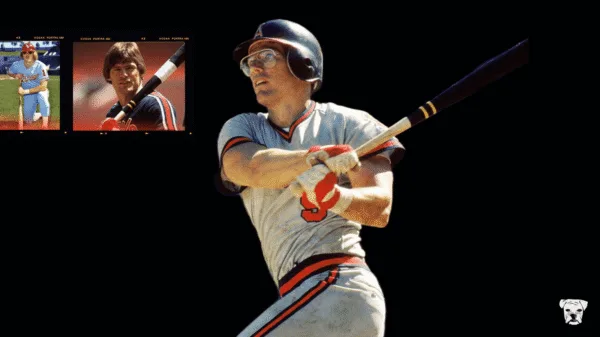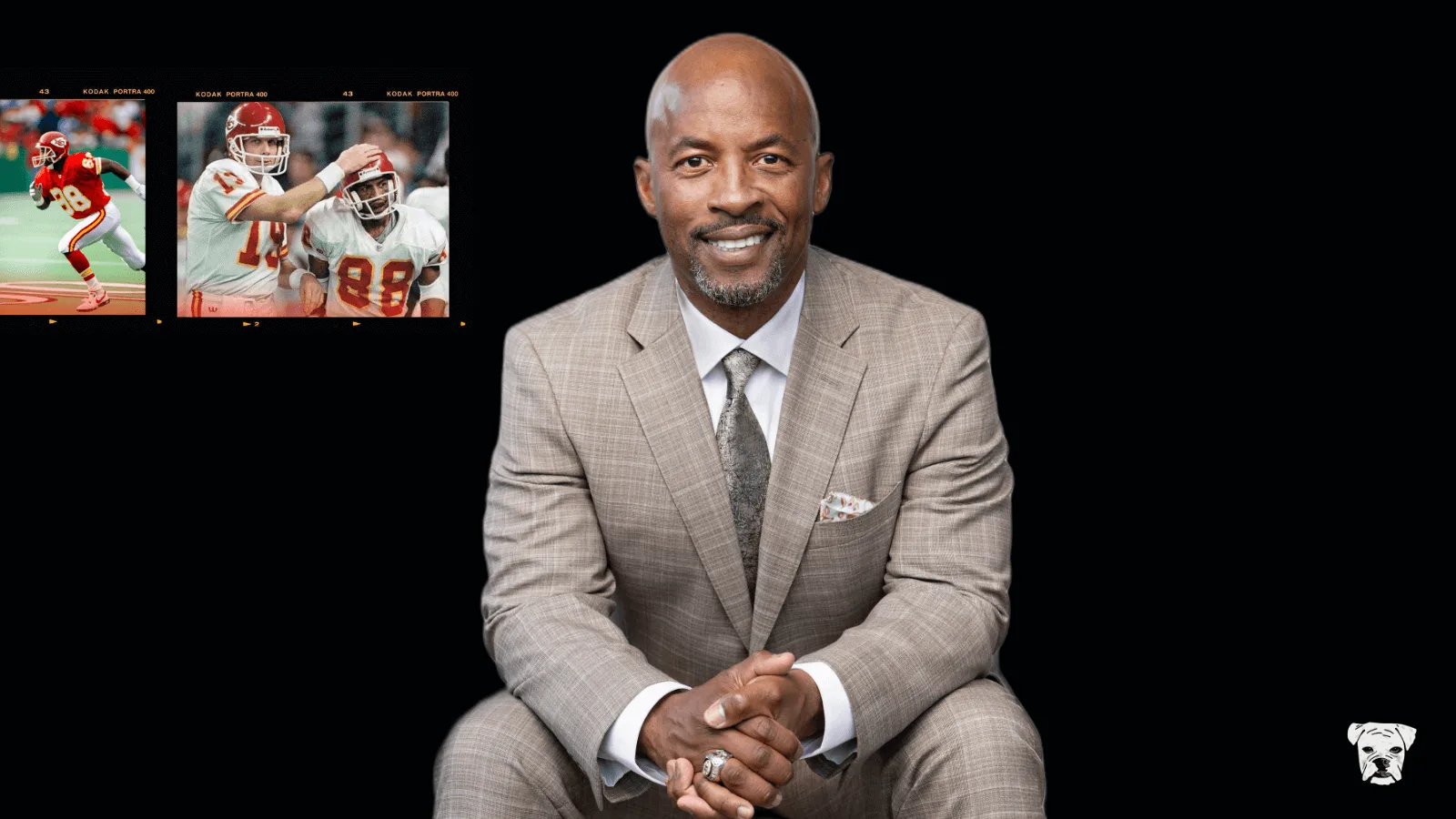
At first glance, JJ Birden didn’t look like a football player. All his life, coaches had no trouble reminding him of that.
He was only 133 pounds in high school. And even though he was a speedy track star, football recruiters didn’t think he could hang at the college level.
But instead of taking no for an answer, he created his own opportunity.
After landing at Oregon, he convinced the head coach to give him a chance. He ended up making the team as a walk-on.
“For me, if size was going to be my disadvantage physically, then preparation, speed, intelligence, and mindset had to be my advantage.”
That mindset carried him all the way to the doorstep of the NFL.
But getting an opportunity on the field was a whole different battle.
In our exclusive interview, JJ shared pieces of his story that he hasn’t discussed publicly. All the highs and lows that led to a 157-pound receiver spending nine years in the NFL (no one at that weight has played longer).
During his time in the league, he caught passes from Hall of Fame QB Joe Montana and faced off against Hall of Fame defenders like Deion Sanders. He totaled 3,441 receiving yards and 17 touchdowns between his years with the Chiefs and Falcons.
As an “undersized overachiever”, Birden’s experience created the perfect launchpad for his career as a keynote speaker. Today, he shows people across the world how to “Beat the Coverage”.
As he told me, “In football and in life, you’re going to face coverages, the doubts, obstacles, and disadvantages that stand in your way. You can let them stop you, or you can study them, prepare for them, and beat them.”
Q: At just 133 pounds in high school, how did you respond to people who thought you might be too small to play college football? And how did you deal with that doubt internally?
I heard the “too small” comment my entire life. At 133 pounds, I didn’t look like a football player, and people had no problem reminding me of that. But I never let their opinion become my identity.
A lot of people saw me as an underdog, and honestly, I was used to that. But here’s the key: I never believed I was the underdog. If you let that label get in your head, it can work against you mentally. So I decided to flip it and use it as an advantage.
I’ve always believed underdogs have a stealth-like opportunity to win. People don’t see them coming because they’re motivated by something different, like the drive to prove you wrong. And that kind of motivation can be powerful in the beginning.
For me, if size was going to be my disadvantage physically, then preparation, speed, intelligence, and mindset had to be my advantage. I leaned into what I could control: my work ethic, my discipline, and my competitive mindset.
That mindset became my formula all the way into the NFL: control the controllables, ignore the noise, and use doubt as fuel.
Q: Coming out of Lakeridge High, you were mainly recruited for track. How did the conversations go with colleges when you mentioned also trying to walk on to their football team? And how did you convince Oregon to say yes?
Even though I was the number one high school wide receiver in the state of Oregon and first-team All-State, no Division I program felt I could play at that level. I received plenty of letters, but they were from Division II, Division III, and junior college programs.
And honestly, I didn’t have a strong desire to play college football at first. But I didn’t like the idea that so many schools believed I couldn’t do it. That didn’t sit well with me.
I knew I was going to earn a Division I track scholarship. I’d had a strong junior year, and I was confident in the work I was committed to.
So when Division I track programs came to recruit me, I asked each coach the same question: “What do you think about me trying football for one year?”
All the top schools said no, except Oregon.
Oregon’s head coach, Bill Dellinger, and assistant coach John Gillespie told me:
“If you run track for us your first year, and you can convince Coach Rich Brooks, the football coach, to let you try out the next year, you have our blessing.”
Once I got that green light, I knew I was going to Oregon. I had a game plan. I didn’t know exactly how yet, but I knew I’d create the opportunity.
And the quick story is this:
That following spring, during track season, I snuck off a couple of times to watch the spring football practices, just to see if the guys were really that much bigger than me.
After two days in the stands, I realized right away I could play at that level. I just needed the chance.
So the next day, I made my move.
I stood on the practice field near the goalpost, a spot players weren’t supposed to be, waiting for a coach to come over and tell me to leave. When they did, I was going to tell them exactly why I was there.
Sure enough, head football coach Rich Brooks walked all the way down the field to me.
He said, “Birden, you’re the track kid. What are you doing out here?”
I told him, “Coach, I want to play.”
He said, “Well, we evaluated you. We just thought you were too small.”
I said, “No, coach, I can do this.”
He paused and said, “Come to my office tomorrow, and let’s talk.”
The next day, I was in his office. And in 30 minutes, I convinced him. He looked at me and said:
“You can walk on this fall.”
That moment changed everything. Oregon never recruited me; I created that opportunity myself.
And this experience taught me a lesson I still teach today: Sometimes in life, you have to create opportunities where it appears none exists.
I had no idea that moment would lead to nine years in the NFL, but it did.
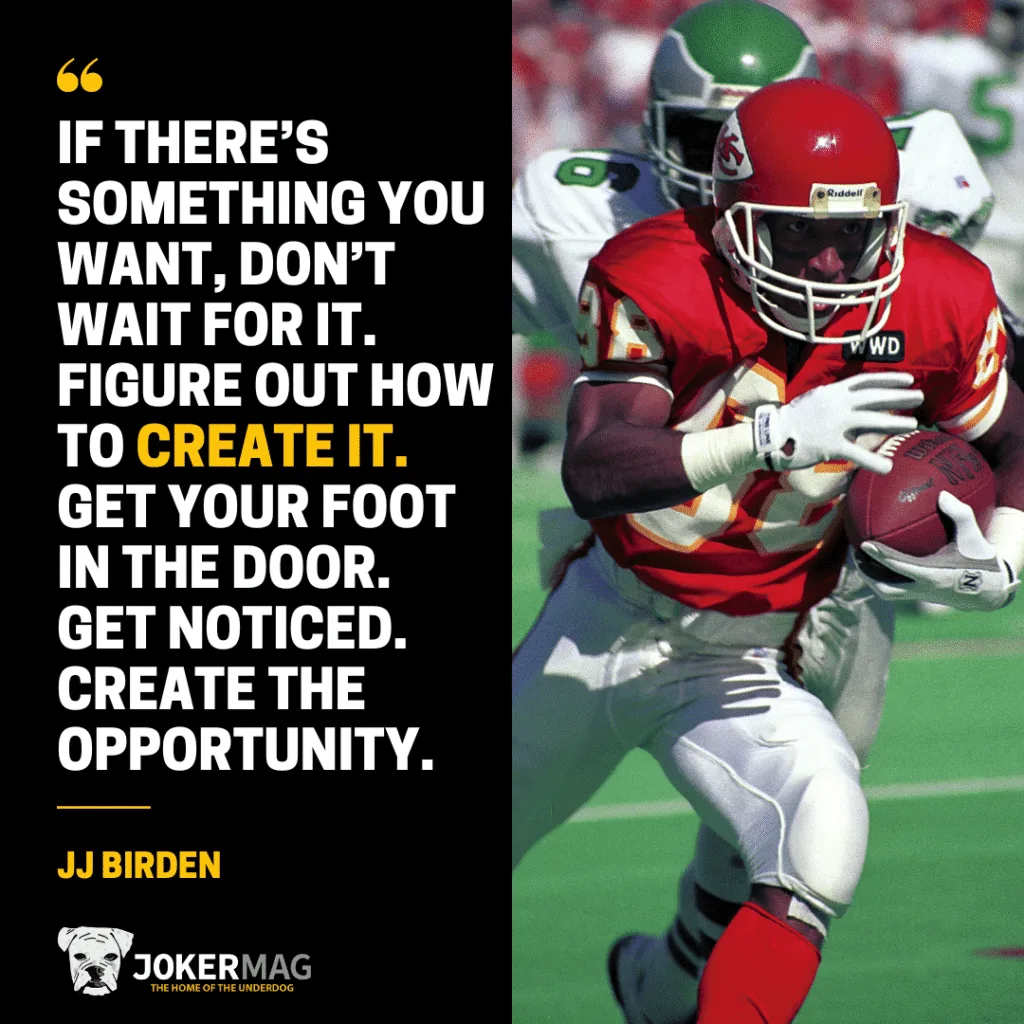
That’s the lesson: if there’s something you want, don’t wait for it.
Figure out how to create it. Get your foot in the door. Get noticed. Create the opportunity.
And when you finally get your shot, you blast through that door and maximize it, because you never know where it can take you.
Q: You dealt with a few injuries at Oregon and once told The Athletic that you had a “very unimpressive college career.” Despite that, and weighing only 155 pounds as a graduating senior, you landed an invite to the NFL Combine. What was the Combine and whole pre-draft process like for you?
That’s very true. I had an unimpressive college football career. I caught three passes my freshman year, three my sophomore year, 21 my junior year, and 19 my senior year… with only one touchdown.
Those aren’t NFL-caliber stats for a college wide receiver.
But somehow, I still got invited to the NFL Combine.
I heard later that teams saw me as this “mystery track guy who could catch the ball.” I didn’t know much about the Combine, but I knew one thing: it was a testing environment. And testing was my wheelhouse. Run fast, jump high, catch the ball. That was the easy part for me.
But I weighed 157 pounds at that Combine, and scouts weren’t impressed with that. You could see it on their faces.
Even then, I never believed I was going to get drafted. And honestly, I wasn’t focused on the NFL. My heart was in track. I was focused on the Pac-10 Championship, since I was the defending champion in the long jump. Then the national track and field meet, and then the Olympic Trials. That was my path.
So when the draft rolled around:
Day 1, my agent, Frank Bauer, said I might get drafted late.
I told him, “No, I’m not,” and went to class.
Day 2, he said, “You’re getting drafted today. Don’t go anywhere.”
I told him again, “No, I’m not. I’m going to class.”
My roommate, Rod Green, talked me into staying, so I stayed home.
A couple of hours later, Frank called: “Eighth round. Cleveland Browns. I’ve got to get off, they’re about to call you.”
I’m thinking, What? What?!
Then the phone rings, and it’s Marty Schottenheimer. I didn’t know who he was at the time, I honestly thought it might be a prank — but it was real.
I was excited, but also conflicted. Suddenly, I had a decision to make:
Do I go to the Olympic Trials in the long jump, or do I go to an NFL training camp with the Cleveland Browns?
I had two doors open, and only one would define the next chapter of my life.
Q: After being drafted with the 261st overall pick, your NFL career got off to a rocky start with a knee injury that led to being cut by several teams. How did that period of time impact you mentally?
I did not have the most auspicious start to my NFL career. The week after the draft, the Cleveland Browns held their rookie camp. Even though I still didn’t have a real desire to play in the NFL, I told myself, Go to rookie camp so you don’t have regrets. See what it’s like. Then come back and finish track.
But on the third practice, I tore my left ACL.
That was my first real test of adversity as an athlete. My track career, which I cared about far more than football at the time, was suddenly over. I was crushed. At that point, my thinking was: Well, the Browns have to rehab me now, so I signed and spent the entire season on injured reserve.
When I first got to Cleveland, I honestly didn’t believe I could play at that level. Everyone looked too big, too strong, too good. But sitting in meetings and watching practice every day, something shifted.
One day it just clicked: “I can play in the NFL… if I really want to.”
And then I said the words that changed everything: “I want to play in the NFL.”
From that moment, my mindset locked in. That became the next goal.
But the adversity didn’t stop there.
Cleveland cut me the next year. Then came calls from Kansas City, Detroit, and Green Bay, all wanting to sign me. But as I flew into each facility, swelling in my knee caused me to fail every physical.
Four teams rejected me in five days.
That week almost broke me. That much rejection in such a short span can take the strongest person down mentally.
But I made a decision, and it was a defining one: This wasn’t going to be the moment that ended my career.
This was going to be the moment that turned it.
That’s what I teach now through F.A.S.C.O. (failures, adversities, setbacks, challenges, and obstacles). Those moments don’t decide your story unless you let them. They can take you down and out, or they can take you to something bigger.
I chose to let that moment take me to something better.
Q: Around that time, you found out your wife was pregnant, and time was running out on making a career in pro football. How did you end up with the Kansas City Chiefs?
So after experiencing all that rejection, I went right back to work.
Several weeks later, the Dallas Cowboys called and signed me to their practice squad. I showed up every day, worked hard, did everything asked of me… and they never played me in a game. When the season ended, Jimmy Johnson told my agent he didn’t think I was right for the NFL and suggested I should go do something else.
Here was another moment where someone tried to tell me what I couldn’t do, when deep down I knew I could.
For me, it wasn’t about doubting my ability. It was about getting healthy and finding the right team.
A month later, five NFL teams wanted to sign me. And this was my third year in the league without playing meaningful snaps. I knew if you don’t make it by year three, you get labeled. So this was a critical decision.
I chose the Kansas City Chiefs because Marty Schottenheimer, the same coach who drafted me in Cleveland, was there, and at the time, they didn’t have any receivers running under 4.5. I was running a 4.33, the fastest I’d ever been.
I signed, had a great offseason, and knew I’d made the team… until I got cut. I had outplayed a drafted receiver, but he had to make the roster.
Marty said, “I’m bringing you back in two weeks. Hang tough.”
Two weeks passed, and things were getting hard. Financially, we were struggling. I hadn’t made real money in my first two years. I’d just married Raina, my college sweetheart, we had a honeymoon baby on the way, all the bills were paid, and I had exactly $300 to my name.
On the third game, I called Marty and said, “Coach, I need a job. Other teams are calling. I told you I’d give you two weeks.”
He said, “Hold on, come to my office.”
When I walked in, he reached for his wallet, pulled out $200, handed it to me, and said, “Will this get you through the weekend? And take your wife out to dinner.”
That Monday, they cut a wide receiver. The Chiefs signed me the next day. And the rest is history.
Q: After carving out a starting role, you ended up starting 62 games in the NFL across 7 seasons. According to your website, no one under 160 pounds has played longer in the NFL. What would you say was the most important lesson you learned from playing (and sticking around) in the league for such a long time?
That’s true. I’ve done the research. I don’t know how far back it goes, but I’m up to around 35+ years, and during that time, there hasn’t been another NFL player who played longer than me while weighing under 160 pounds. There might be guys shorter than me, but I’m talking strictly weight.
And to clarify, I’m credited for nine NFL seasons, not seven. The NFL credits me for those first two years, including the year I spent on injured reserve. I’m proud of that. For someone my size, nine credited seasons is something I don’t take lightly.
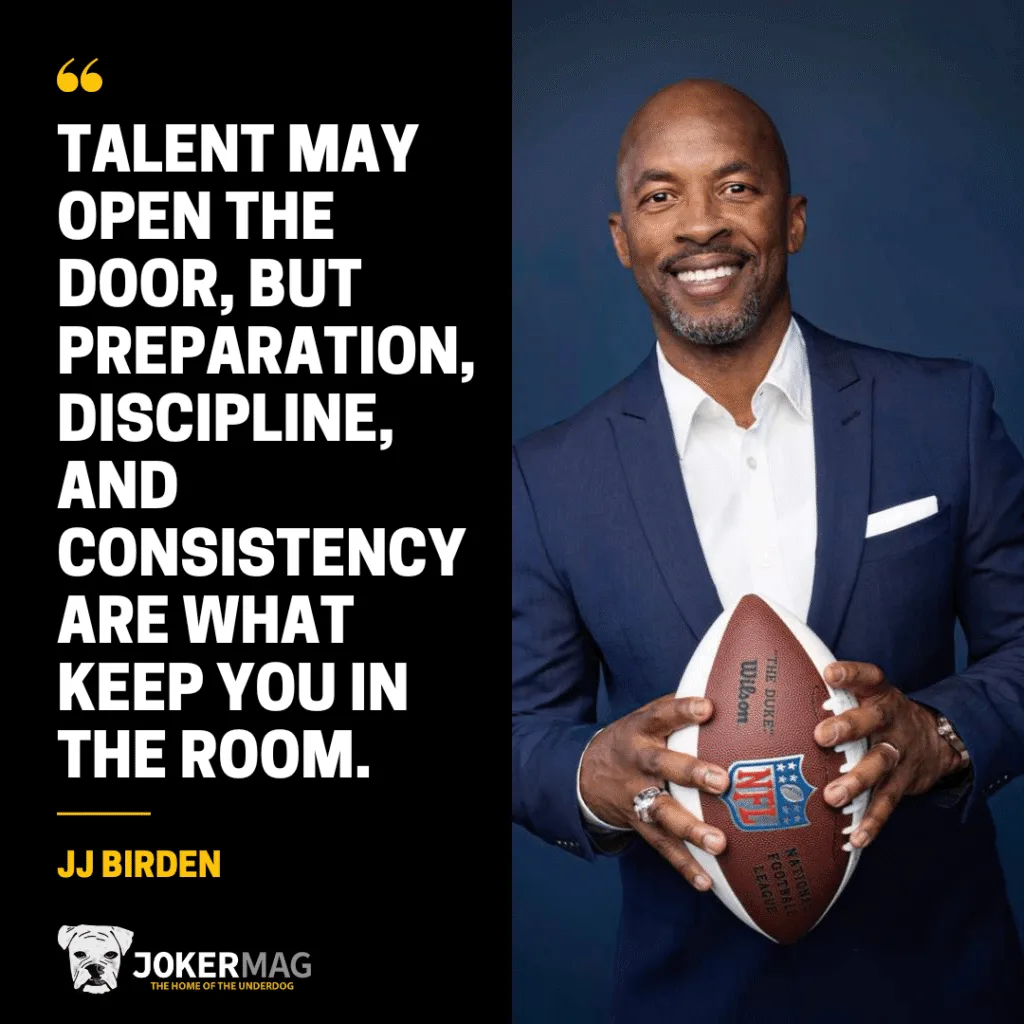
As for the most important lesson? I could go on for days, but here’s the one that really carried me: Talent may open the door, but preparation, discipline, and consistency are what keep you in the room.
I couldn’t rely on size. I couldn’t out-muscle anyone. So I had to dominate the areas I could control, my speed, quickness, intelligence, precision, and preparation.
I became a student of the game.
I studied film like a quarterback.
I practiced my releases everywhere, in the mirror, around the house, with my wife standing in as a defensive back, and then on the field until it became automatic.
I learned defensive tendencies… their leverage, their tells, how they used their hands, what they bit on. Those little details gave me the edge I needed to survive.
That preparation built confidence. And that confidence helped me perform under pressure, which is what earns you longevity in the NFL.
Here’s the real lesson: Your biggest disadvantage stays a disadvantage only if you ignore it.
If you prepare around it, it becomes your advantage.
That’s the foundation of my Beat the Coverage message today. In football and in life, you’re going to face coverages, the doubts, obstacles, and disadvantages that stand in your way. You can let them stop you, or you can study them, prepare for them, and beat them.
That’s how a 157-pound underdog lasted nine seasons in the NFL.
Q: Your underdog story became the perfect launchpad for your career as a keynote speaker. What is your favorite story or lesson to share with an audience?
I love this question because I have so many stories. One of the first things my mentor, Dr. Will Moreland, told me when I started my speaking business over ten years ago was, “Document everything.”
He said, “Write down the good, the bad, the ugly, every moment you’ve lived that taught you something.”
That became one of the most valuable exercises of my speaking career. And through that, I learned a simple formula:
Tell the story. Make the point. Give them an action step.
Stories are powerful, but only if the audience can take something with them. Ironically, my favorite story isn’t from the NFL or college.
It happened my junior year of high school, during a mile relay I never planned to run.
Here’s the quick version:
We were at the district track meet. I had already won the high hurdles, triple jump, and long jump. My shoes were off, I was relaxing in the stands, and I was done for the day.
Then one of our seniors, Thane Cleland, walked up to me and said, “JJ, we’ve got three really good runners on the mile relay. We need a fourth. We have a chance to go to state. The guys want to know if you’ll run with us.”
I said, “You’re crazy. I don’t run 400s.”
I had never run one full speed around a track. I turned him down over and over.
Then he said something that stuck:
“You’re already going to state in three events. Some of these guys aren’t. Give them a chance.”
So I agreed, instantly regretting it, but I committed.
When the race came, our team did exactly what Thane said. Runner one gave us a 10-yard lead. Runner two extended it. Thane, our star, extended it even more. By the time I got the baton, we had about a 30-yard lead.
But then reality hit me:
Who am I running against?
On the other teams, I saw the 200-meter champion (21.6), the 100-meter champion (10.5), and the 400-meter champion (48.8). I was 16 years old. I wasn’t beating these guys in a flat-out race.
So fear kicks in. And right behind it came a voice:
Come up with a plan.
I decided not to sprint out. I went out smooth, controlled, letting them catch up so they’d burn energy. On the back stretch, I heard footsteps; it was the 200-meter champ.
I literally thought, “Greg, I’ve been waiting for you.” When he went to pass me, I yelled “No!” and surged with him, keeping him wide on the curve.
Then the 400-meter champion bumped me on the inside. Then I saw the 100-meter champion coming up on the outside. So now it’s all of us, shoulder-to-shoulder, heading into the final 90 meters.
In my head, I kept saying: Not yet… not yet…
At 70 meters: Go.
I shifted gears and just took off. Not by much, but enough. I pulled two yards ahead and held on. I could hear the guys breathing down my neck. I could see my teammates screaming at the finish line. I leaned, crossed, threw my hand up, and we won.
I’ve had a lot of great moments in sports, but that one stays with me because:
I was scared.
I knew the odds weren’t in my favor.
But I didn’t let fear make the decision.
I made a plan, executed it, and helped my team win.
That’s the lesson I share with audiences:
Fear is normal.
Staying stuck in it is optional.
When you create a plan and execute it, you give yourself a chance to win, even when the odds say you shouldn’t.
That’s a message every underdog can use.
Q: Thank you so much for your time, JJ! How can our readers support you and your work?
I appreciate the opportunity to share my story. My mission today is simple: help people develop the mindset, discipline, and strategy to overcome the odds and win as underdogs so they are always beating the coverage in business, leadership, and life.
If readers want to support the work, here are a few meaningful ways:
- Connect with me on my platforms – I’m active on all social media platforms (@jjbirden), where I share daily content around leadership, discipline, resilience, and my Beat the Coverage philosophy.
- Visit my website – JJBirden.com is the hub for everything I’m doing, my new brand, keynote details, media features, and upcoming projects. You can sign up for my newsletter, “Between The Lines.”
- Bring me in to speak – I’m always looking to partner with organizations, teams, and conferences that want to help their people perform under pressure, navigate transition, or build a winning mindset. Speaking is the core of my work, and I love making an impact in those rooms.
- Stay tuned for what’s coming – We’re getting ready to release more around my new brand, Beat the Coverage, including future coaching programs and a new book that’s in development.
At the end of the day, I’m grateful for anyone who connects, shares the message, or passes my name along when a company or event is looking for someone who can inspire their people to rise above challenges and seize their opportunities.
Thank you again, keep finding ways to Beat the Coverage in your own life.
Editor’s Note: A big thanks to JJ for his time and for sharing so many behind-the-scenes stories with us!