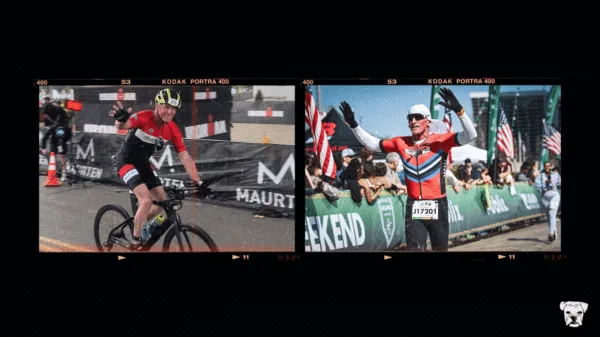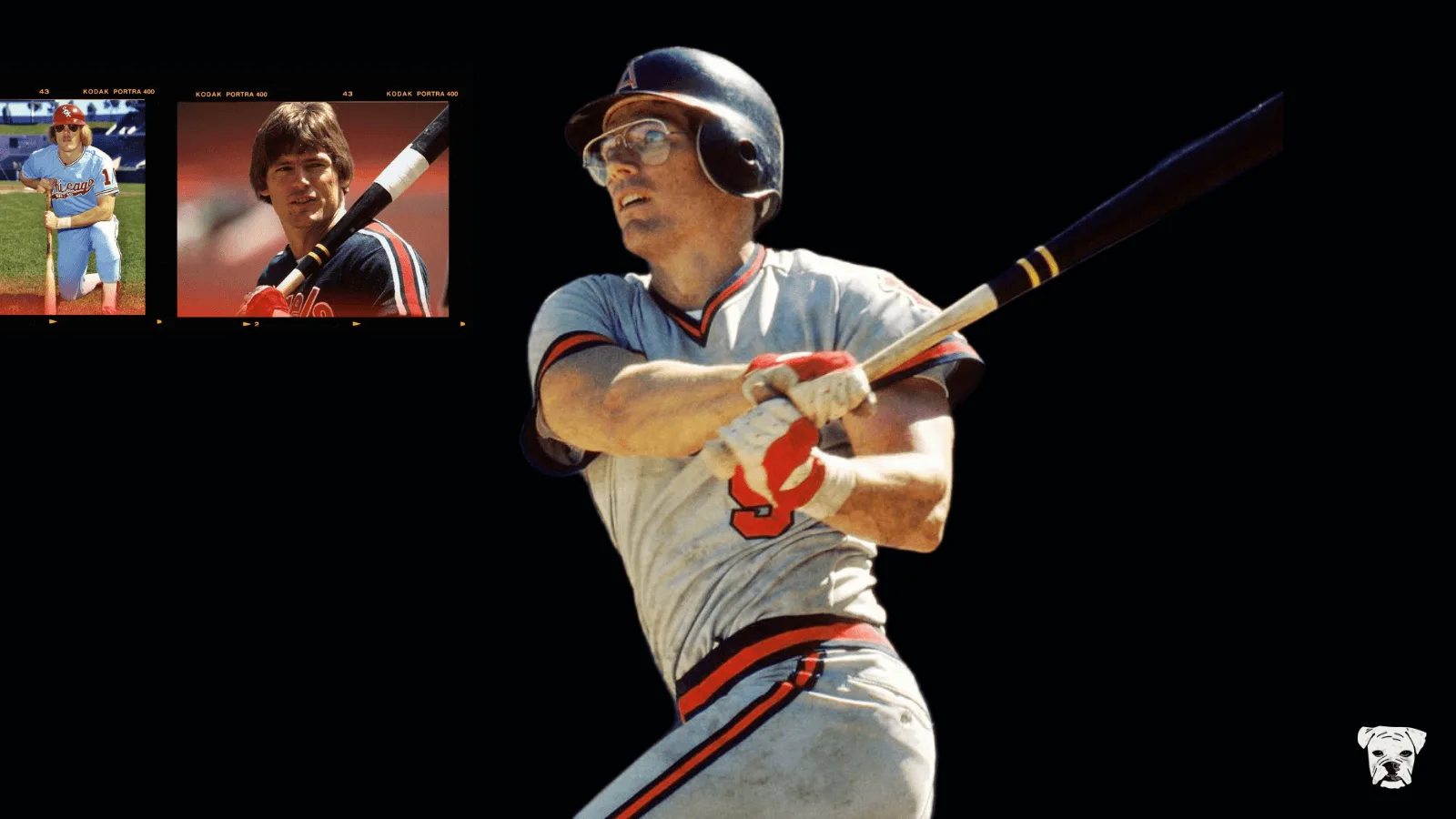
“How did you ever make it? You were terrible.”
Brian Downing faced the same question whenever he ran into an old high school teammate.
From the outside looking in, the answer wasn’t clear.
How does a guy who got cut from pretty much every team he tried out for end up playing in the big leagues?
Not only play, but produce. For two decades.
It all started on October 4th, 1959. He called it “the day when it hit me.”
The week before his 9th birthday, a young Brian Downing went with his grandmother to see his very first pro baseball game. Not just any game, but Game 3 of the World Series.
Seated among the 92,394 fans at the Los Angeles Coliseum, he watched as Dodgers ace Don Drysdale held the White Sox scoreless through 7 innings. Then, in the bottom of the 7th, 37-year-old Carl Furillo came to the plate as a pinch-hitter and smacked a single that drove in the first 2 runs of the game.
The crowd went wild, and the Dodgers went on to win 3-1.
“From that day on,” Brian said, “I gave everything I had to making it.”
But the road wasn’t easy.
When he couldn’t find a local pickup game or friends to play with, he went into his backyard to hit bottle caps with a plastic bat. It was how he spent most of his time: completely alone.
Brian described himself as painfully shy. He never spoke in class, never went to a school function, and didn’t go on his first date until much later than most (when he was 23 years old).
He walked everywhere – to high school and, later, to junior college – because his parents refused to sign the consent form for driver’s ed classes.
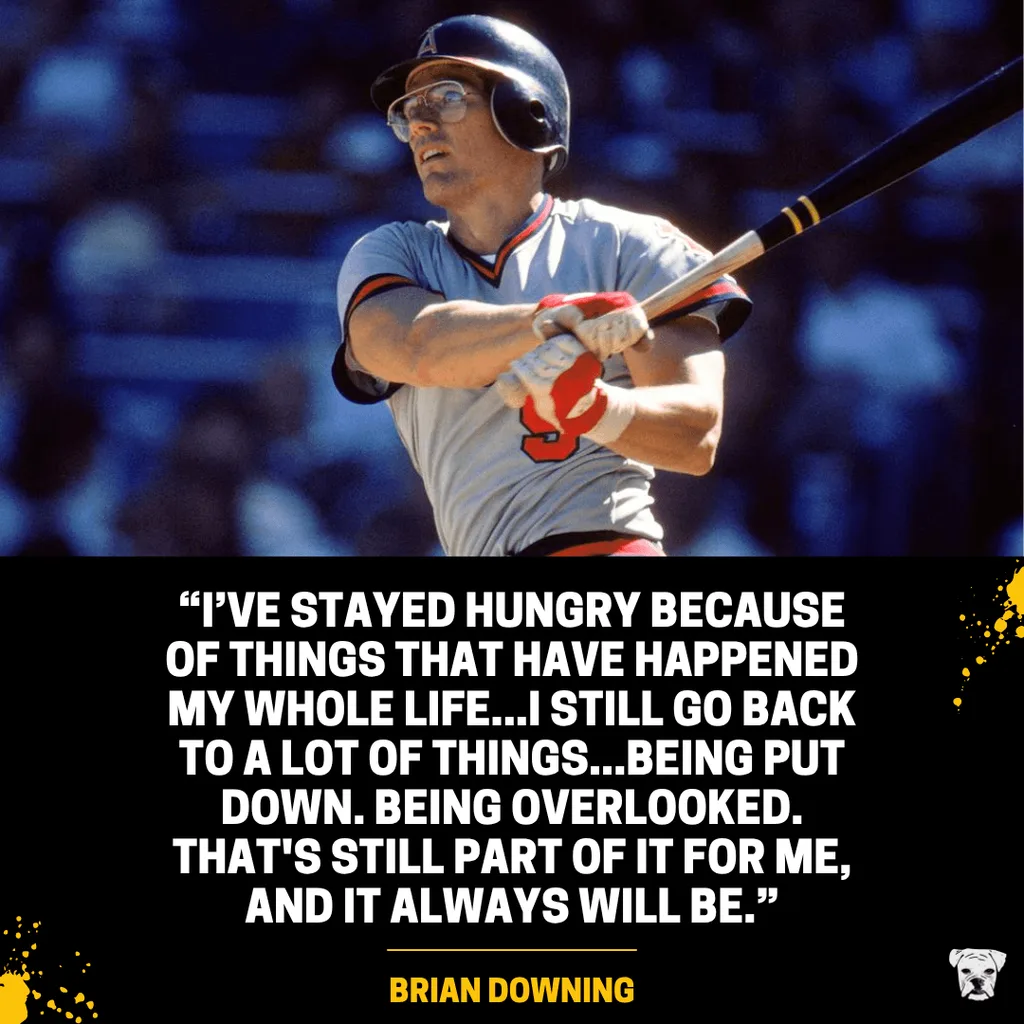
“I’ve stayed hungry because of things that have happened my whole life,” he said.
“It’s been like this for me since my childhood. I never had anything to give me much confidence from about 12 years old on. I still go back to a lot of things that happened earlier to me. Being put down. Being overlooked. That’s still part of it for me, and it always will be.”
Baseball became his escape. His passion.
Yet, that passion took a while to translate to the field.
At Magnolia High School in Anaheim, he didn’t make the varsity team until his senior year, when he’d grown to about 5’8” and 160 pounds. Even then, he barely got any playing time.
For most, that might’ve been a sign to hang ‘em up. But not for the kid who spent almost every afternoon in the backyard, smacking bottle caps and perfecting his swing.
After graduation, he enrolled at Cypress College – a junior college just a few minutes from home. While his intention was to walk on to their baseball team, things didn’t go as planned.
He didn’t make the final cut. Instead, he was put on the team’s “taxi squad” as a bullpen catcher.
It was a loose title. In reality, he sat on the bench and kept the book all season, watching as pitchers played the field over him.
He received three pinch-hit at-bats all year and recorded one hit – a single off of future major leaguer Al Hrabosky.
Still, he refused to quit.
Later that summer, Brian heard from his American Legion coach that the Chicago White Sox were hosting an “all-comers” open tryout. It was an attempt to replenish their farm system as more young men were being shipped off to Vietnam.
Bravely, he showed up to the tryout. Yet most of the scouts in attendance saw the same things Downing’s high school and college coaches saw.
Except for one man: Bill Lentini, a part-time scout with a reputation for uncovering “hidden gems” across Southern California.
“Brian was this scrawny guy back then,” said Roland Hemond, a White Sox executive. “I asked Bill what he saw in him, and he said, ‘This kid is so aggressive. He loves to play.’”
Sure, his physical tools were mediocre, but he could play pretty much any position. Plus, Lentini said, he would sign for next to nothing.
”Bill Lentini might have been the only person who believed in Brian,” Hemond said. “It’s like he’s been on a crusade his whole career to prove Bill Lentini was right.”
Rarely does an “all-comers” tryout lead to a contract. But for Brian, it did.
He signed with the White Sox for $2,000 as an undrafted free agent in August of 1969. Since it was so late in the season, he didn’t get a chance to suit up until the following spring.
Downing’s professional career began in Sarasota, Florida. As a 19-year-old who’d barely faced high school varsity or college pitching, rookie ball went about as well as it could have.
The first-year pro batted .219 with just two extra-base hits. But the White Sox brass liked his versatility, and he earned a promotion to A-ball the following season.
With more plate appearances, his hitting improved, and he carved out playing time wherever there was an open spot – catcher, third base, and all over the outfield.
In May of 1973, he got called up to the big leagues. He made his MLB debut as a late-game defensive replacement at third base, hoping to make an impression. A few pitches later, he got his chance.
The batter lifted a high pop-up that sailed into foul territory on the third base side. Downing sprinted after it, diving into the dugout to make the highlight-reel grab and record the out.
Unfortunately, he skidded down the dugout steps and tore up his knee in the process.
The gruesome injury forced him to miss all of June and July, and part of August. When he returned, he hit just .178 in 34 games.
But once again, he refused to give up.
In the years that followed, the White Sox gave Downing multiple chances to lock down the starting catching job, though he never quite put it together. In his 5 seasons on the South Side, he hit .243 with 43 doubles and 26 homers.
He’d hit a wall at 27 years old, and the White Sox lost hope.
After the ‘77 season, they shipped him off to Anaheim as a “throw-in” in a multi-player trade that sent Bobby Bonds to Chicago.
Downing later said that the move home to California saved his career.
But 1978 produced more of the same: another mediocre season with a .255 batting average, 15 doubles and 7 homers. He also had surgery to remove bone chips from his throwing elbow.
His window of opportunity was closing, and he knew it. Much like the days after getting cut in high school and college, the ‘78 offseason was another inflection point. Time to put up or shut up.
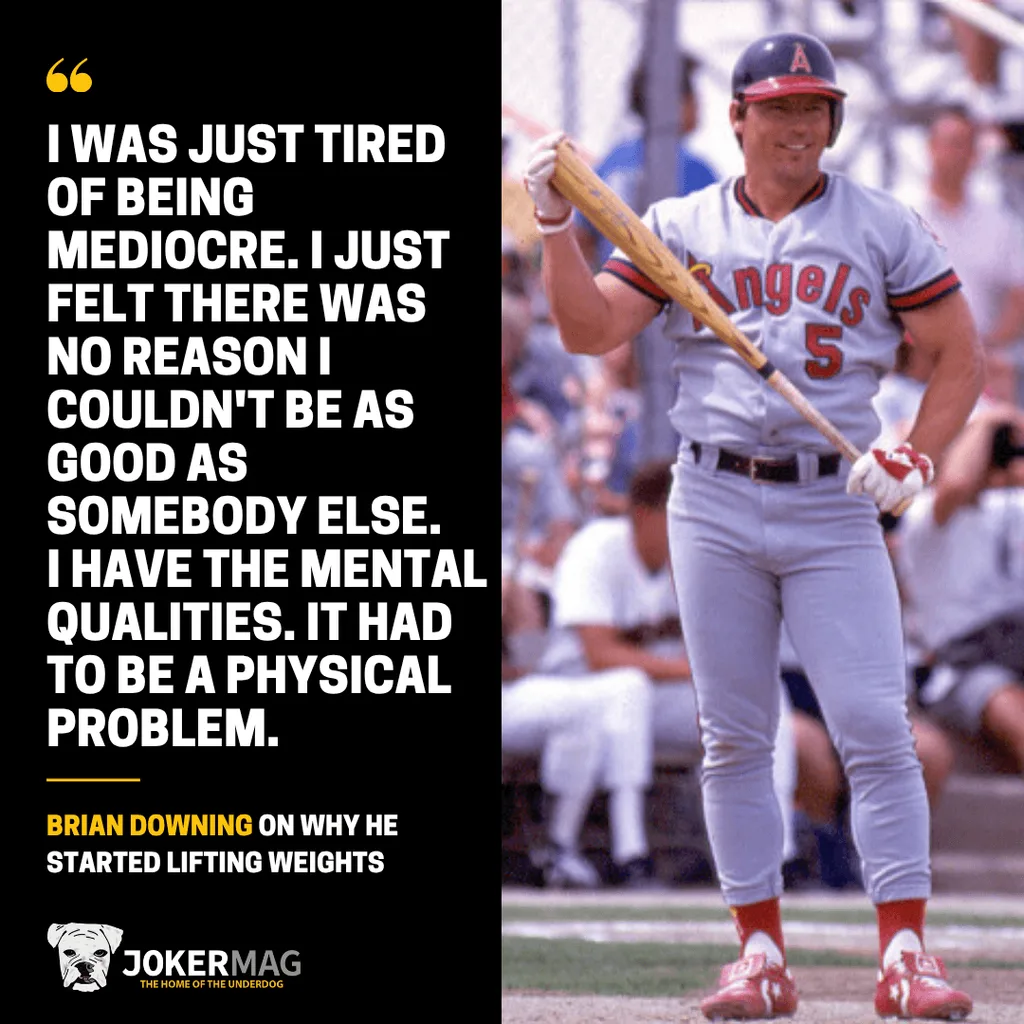
“When I was in the hospital with my arm in a cast, I had nothing to do; nothing to think about,” he told The New York Times.
“I was just tired of being mediocre. I just felt there was no reason I couldn’t be as good as somebody else. I have the mental qualities. It had to be a physical problem.”
Lying in that hospital bed, he crafted a two-pronged plan.
First, he decided to get bigger and stronger.
In today’s age of middle schoolers squatting 315 pounds, it seems odd to think there was a time when athletes didn’t lift weights. But this was 1978. Pumping Iron had just come out, and bodybuilding was still an obscure concept, especially in baseball.
So Downing decided to do what others wouldn’t. He rented a condo in Palm Springs and spent $3,000 to $4,000 on equipment to build his own home gym.
He hit the weights three to five hours per day, five days a week, gaining 15 pounds in one offseason. He bulked up so much that his old Angels uniform no longer fit him.
Teammates and fans started calling him “The Incredible Hulk”.
Sports writer Dave Zaslawsky noted, “When the 29-year-old discusses weightlifting, he sounds like a father bragging about a young son’s first base hit in a Little League game…His massive arms and barrel chest can’t help being noticed. He is a linebacker wearing a baseball uniform.”
The second part of his plan was to change his batting stance.
This wasn’t just a small change – like lowering his hands or spreading his feet by an inch or two. It was a complete overhaul.
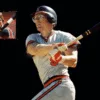
Downing moved his hands closer to his head and opened up his stance, allowing him to see the ball better out of the pitcher’s hand.
His new approach sparked debate. Baseball writers called it “crazy-looking”, “strange-looking”, and “unorthodox”. If you’re having trouble visualizing it, you can see an exaggerated impression here.
“He looks funny,” said Angels hitting coach Deron Johnson. “He’s devised his own way of hitting the ball.”
Funny-looking or not, it worked.
The newly bulked-up catcher set career highs in every offensive category, slashing .326/.418/.462 with 27 doubles and 12 home runs. He made the All-Star team and helped the Angels win the AL West for the first time in franchise history.
“Brian made himself into the player he is,” said teammate Don Baylor. “He’s stayed around because of the extra work he put into it. Hit, hit, hit, hit.”
The following season, Downing hit another roadblock when he broke his ankle, limiting his ability to spend 9 innings calling games behind home plate.
From then on, he moved to the outfield – where he set the AL record with 244 consecutive errorless games from 1981 to ‘83 – before finishing out his career as a DH.
Who would’ve thought? The guy who could barely hit in high school, college, and the minors – the one who signed a pro contract solely because of his defensive versatility – became a full-time designated hitter.
After committing to year-round bodybuilding, his average season reflected a completely different player: a slash line of .273/.376/.448 with 22 homers and 82 RBI.
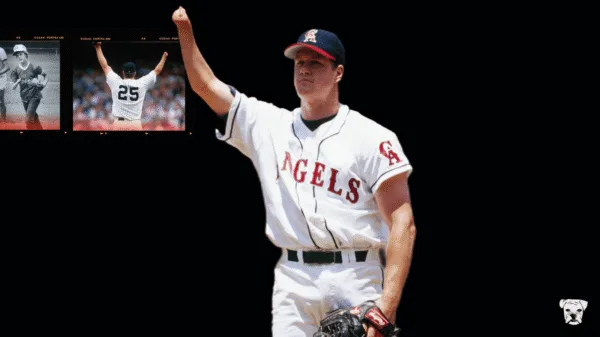
Ultimately, Brian Downing spent 20 years in the big leagues.
He played through his age-41 season and left the Angels as the franchise’s all-time leader in almost every offensive category. He was inducted into the team’s Hall of Fame in 2009.
You can make a compelling argument that Downing is the ultimate baseball underdog.
A quiet kid with wire-framed glasses who never let any setback throw him off course. Who willed himself to MLB stardom.
He got cut in high school, yet still walked on to a junior college team. After not making it there, he still showed up to a professional tryout. And even without an impressive skill set, he found a way into pro baseball.
Old teammates would ask, “How did you ever make it? You were terrible. You couldn’t play.” But that kind of criticism never stopped him.
When his first team gave up on him, he completely reinvented himself. He battled through bad seasons, injuries, slumps, and position changes to record over 2,000 hits across two decades at the game’s highest level.
He never backed down from any challenge. He dug in and found a way to win.
“If you put Brian Downing’s heart in a lion,” Reggie Jackson once said, “the lion would be tougher for it.”