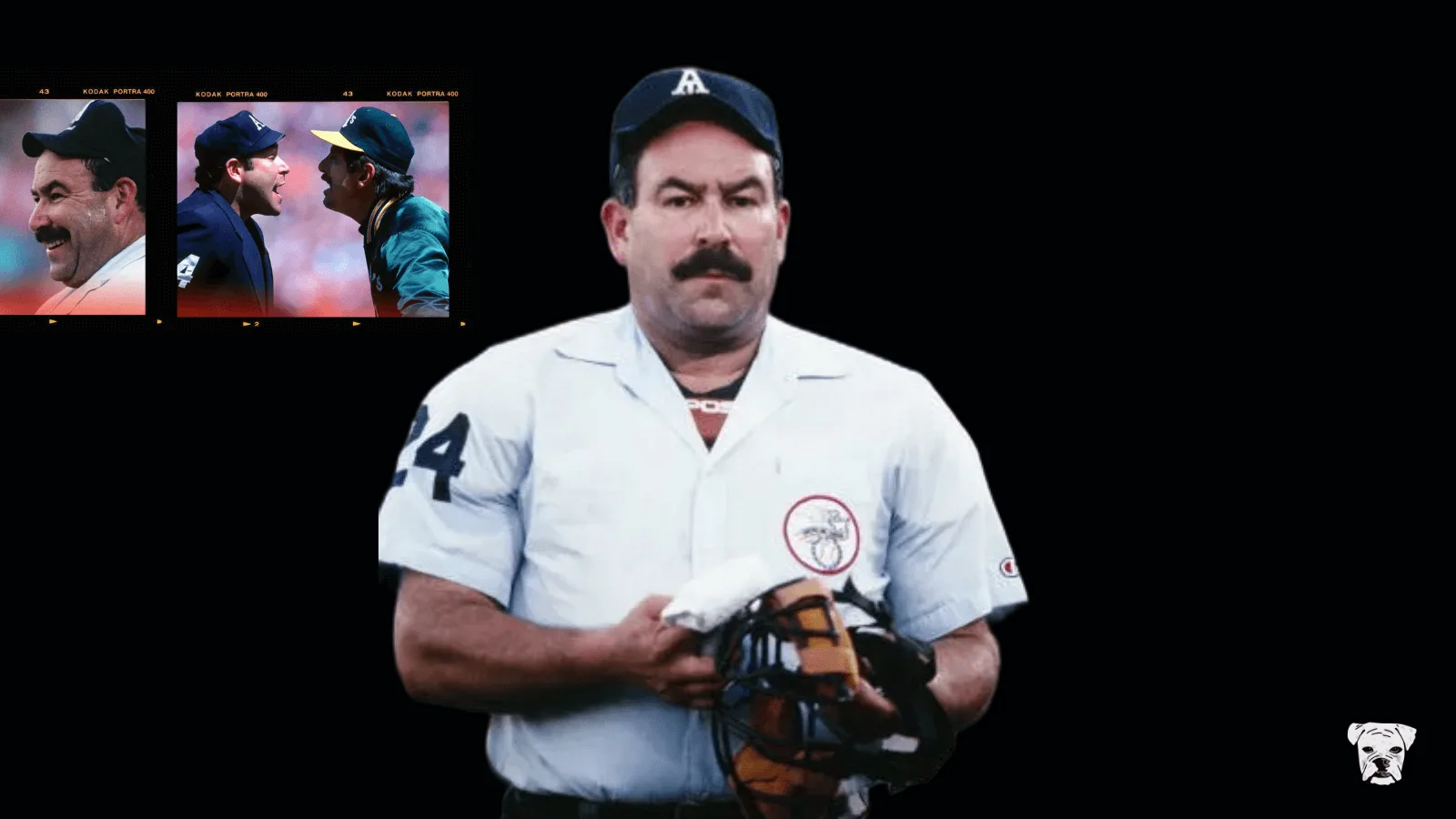
Yankees fans hate the Red Sox. And Red Sox fans hate the Yankees. But one thing they can both agree on is their disdain for the umpires.
One whiff of a tight strike zone, a missed call, or perceived bias against one player or another, and the fans boo together.
But one thing many fans overlook is the human being wearing the uniform. What their motivation really is (hint: it’s not about who wins or loses). And they underestimate the years of work it took for them to get there.
MLB umpires belong to a remarkably exclusive club. A club that is roughly 10 times harder to break into than the ranks of the players they officiate.
At any given time, there are 780 active MLB players, yet only 76 umpires work in the big leagues.
Al Clark was a part of that club for more than 25 years.
And through 3,392 MLB games, he’s seen it all from an “ump’s eye view”: Nolan Ryan’s 300th win, Cal Ripken’s record-breaking game, Randy Johnson’s first no-hitter, and many more historic moments.
I was lucky enough to ask Al a few questions, where I was able to pick his brain about all those experiences. In our interview, he shares why he became an umpire, what he wishes more baseball fans realized, and a funny story of a particularly memorable ‘strike three’ call.
![A quote from our Joker Mag exclusive interview with former MLB umpire Al Clark: "every day I went to ‘work’ as an adult, I put on a Major League Umpire’s Uniform…and my offices were Yankee Stadium, Fenway Park, Tiger Stadium, The Vet, Comiskey Park, [and] Dodger Stadium."](https://jokermag.com/wp-content/uploads/2026/02/Alan-Clark-MLB-Umpire-Work-at-Stadiums-Quote-1024x1024.webp)
Q: In your book, you wrote, “I was a weak-hitting, weak-armed catcher, but always had good judgement; that’s probably why I became an umpire.” How did you actually work your way up to becoming an MLB umpire?
Tyler, as you know, hardly anyone grows up wanting to be an Umpire; all you boys (and girls) want to be players. Unfortunately, not everyone can be a player. When that harsh realization sets in that I wasn’t good enough to be a player, I set my sights on Umpiring. I had Umpired as a second summertime job in the Trenton, NJ area since I was a junior in high school.
After college, I taught for a year and didn’t enjoy that, then I was a sportswriter for a couple of years in the Trenton area, but honestly felt I wanted to eat steaks instead of hamburgers the rest of my life, and decided to take a chance on Umpiring.
I attended Umpire School in 1972 in St. Petersburg, Florida, and was fortunate enough to secure a job in organized baseball in the Class A Mid-West League, and as they say, the rest is history.
In consecutive years, I was promoted to the Class AA Texas League, then the AAA American Association, and in the meantime worked in the Florida Instructional League (an acceleration program for both players and Umpires) in the winter, then two consecutive winters in the Venezuelan Winter League, where I was the league’s Umpire In Chief.
My contract was bought by the American League, and I Umpired my first regular season game on Opening Day, 1976, in Arlington, Texas, the Rangers vs. the Minnesota Twins. My first Umpire crew included crew chief Bill Haller (who IMHO should be in the Hall of Fame, he was that good), Ron Luciano, and Larry McCoy!
Not so much did I encounter any difficulty working my way through the minor leagues, other than a lot of hard work and sacrifice, being away from home almost 12 months a year, and working every single day except for the very occasional off day in the minor league schedules.
All the work and sacrifice certainly paid off in so many ways!
Q: You know better than anyone that umpires aren’t the most popular guys on the field. Through your 26 years and 3,392 MLB games, how did you keep a level head when facing criticism from players, managers, and fans?
Learning how to Umpire from Umpire School through the minor leagues and into the big leagues is so much more than ‘just’ calling balls and strikes, fairs and fouls, outs and safes.
It encounters learning decorum on the field, handling all kinds of situations, and dealing with all kinds of personalities. It’s learning the psychology of very competitive players, coaches, and managers…and how to handle them all in very adversarial circumstances as the person in control and charged with upholding The Integrity of The Game.
So many of these attributes can only be learned through experience and mentoring from older and more experienced crewmates. As you can see, there is so much learning to do in Umpiring than ‘just’ learning The Rule Book.
Dealing with irate players is a learned entity, one accomplished by all Umpires who earn their way to the major leagues.
Dealing with fans is another matter. While fans stay and voice their opinions from the stands and seats is one thing, the scariest experience for an Umpire is when a fan comes out of the stands and onto the field and is coming directly at you. We don’t know if the fan is upset and wants to attack, or just wants to shake your hand. If you put yourself in exactly that situation, you certainly can understand the timid feeling. As the Umpire on the field when THAT happens, you really hope security is doing their job and intervenes quickly!
Q: What’s something the average baseball fan probably doesn’t understand about the reality of being an MLB umpire?
A great question, Tyler. I don’t believe fans know the tremendous amount of pride MLB Umpires attach to doing our job. We all want to be perfect on day one…and improve from there. A pretty tough task to accomplish.
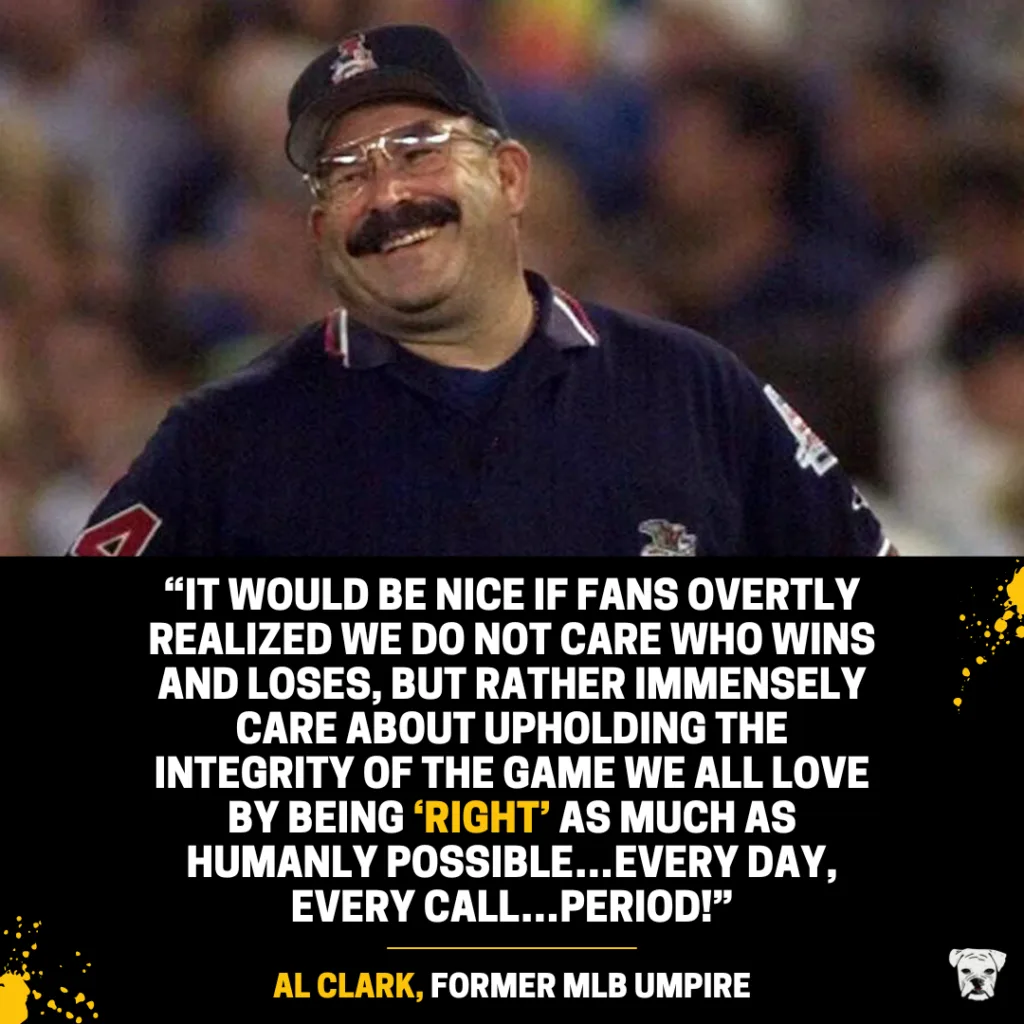
It would be nice if fans overtly realized we do not care who wins and loses, but rather immensely care about upholding the integrity of the game we all love by being ‘right’ as much as humanly possible…every day, every call…period!
Q: The description of your book says that you once tore a hamstring ejecting a player. Could you tell me more about that story?
While playing with the Detroit Tigers, Greg Jeffries was (for some unknown reason) really giving me a tough time from the Tigers’ dugout on balls and strikes right from the first pitch of the game.
Because it was really for no reason (his yelling), I warned him early, but to no avail. He was being a pain, a kind of ‘itch’, if you will understand.
When he came to bat in the seventh inning (I think), he took a perfect pitch for strike three on a 2 and 2 pitch…as he didn’t swing, my eyes widened, and as I demonstratively called “STRIKE THREE”, with my over-the-shoulder call and action, because I kinda wanted to ‘make a point’, I actually ‘pulled’ a hamstring…and man did it ever HURT.
No way was I going to show any kind of pain, even though the pain was excruciating. I continued on… in pain…and finished the game before getting the medical help I so needed!
Q: No doubt you’ve been asked this a million times, but I can’t help myself. What is your favorite story or moment from your career?
Quite honestly, Tyler, my most favorite moment had nothing to do with any of the tremendous baseball occurrences I witnessed on the field. And there really were many. I was very, very fortunate, for sure.
My favorite moment and occurrence was when I signed my very first American League Umpire’s contract. It was the culmination of a lot of hard work, sacrifice, and attaining a so against the odds finish to a tremendous journey started four years earlier.
Little did I know at that time that I would enjoy the tremendous career I did, and it was tremendous.
Can you imagine, just for a moment, every day I went to ‘work’ as an adult, I put on a Major League Umpire’s Uniform…and my offices were Yankee Stadium, Fenway Park, Tiger Stadium, The Vet, Comiskey Park, Dodger Stadium…OMG…talk about living a dream!
Q: You’ve accomplished so many things. You were the first Jewish umpire in American League history. You officiated Nolan Ryan’s 300th win, Cal Ripken’s record-breaking game, Randy Johnson’s first no-hitter, and many other historic moments. And you took on some of the toughest managers in big league history. Through it all, how do you want to be remembered? What do you want your legacy to be?
Quite simply, Tyler, I’d like to be known or remembered as being a very fair MLB Umpire who worked hard every day I walked out onto that field. I’d like to be remembered as a person who cared about the charge to uphold the Integrity of The Game.
I’d like to be remembered for being a good mentor to the younger MLB Umpires that worked with me and the amateur Umpires I may have influenced. What more could one ask for?!
Q: Thank you so much for your time, Al! How can our readers support you and your work?
I’m humbled by how well my book has done. Published by The University of Nebraska Press, Called Out But Safe, A Baseball Umpire’s Journey includes a lot of great stories, all told from ‘an Ump’s Eye View’. Certainly a little twist then from the regular baseball book. The book can still be ordered from Barnes and Noble and certainly from Amazon.
Editor’s Note: A huge thanks to Al for being so generous with his time and sharing such insightful info that the average fan doesn’t know. Go check out his book!