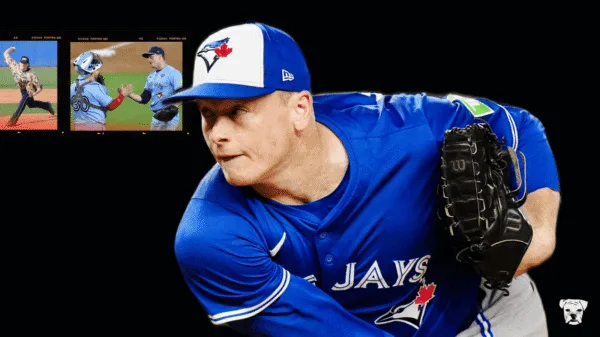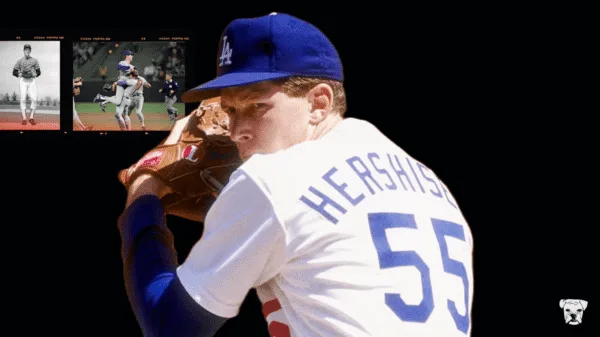
He was only 5’5″ as a high school senior. He weighed 135 pounds soaking wet.
After he broke his arm twice, he taught himself how to throw left-handed.
Oh yeah, and he walked on at a small Division III school.
No one in their right mind would’ve bet on this guy to do what he did. And that’s not even mentioning what he went through at home.
Here’s how he defied impossible odds to become one of the most feared closers in MLB history.
Billy Wagner was only 5 years old when his parents split up. And he was on the move ever since.
Sometimes he’d live with his dad, sometimes with his mom, and other times with his grandparents.
Money was tight. The family relied on food stamps to keep everyone fed.
A standard meal was only “[a] few crackers with peanut butter and a glass of water.”
When he was 7 years old, he invited some neighborhood boys over to play football in his grandmother’s yard. In the middle of a play, one of the kids fell on Billy’s right arm and broke it.
He was a natural-born righty, and now his throwing arm was in a cast.
But when you’re 8 years old, you wanna play. Not sit at home.
So instead of waiting around for his arm to heal up, he taught himself how to throw left-handed.
If you’ve ever tried to throw a baseball with your non-dominant arm, you know how hard it is. Which makes his whole story that much more impressive.
“Yeah, I mean, I’m still pretty much right-handed,” Wagner said in 2025. “I’m right-footed, as a kicker I punt right. I cut my food with my right hand. I’d probably poke my eye out with my left hand with a fork.”
Looking at world-class athletes, you can imagine what most were like at the youth level. Bigger, stronger, and significantly better than the other kids.
Billy Wagner was the opposite.
“I was the guy…grabbing flowers, whatever,” he laughed. “I was that kid. I wasn’t interested.”
Things changed when his father and grandfather started coaching his teams.
Suddenly, there was pressure to live up to the family name – four generations of ballplayers on his dad’s side. He said if he didn’t have them to set the bar, he never would’ve learned how to push and fight for what he wanted.
See, Billy was an angry kid. He wanted what every kid wants: a safe home, a happy family, and a stable life.
With all the moving around, he found his escape outdoors, usually with a baseball in his hand. He’d throw it against the side of the house over and over again.
He threw so hard that it scared his mother and ripped off pieces of siding from the house.
“I was always the littlest on every team,” he said.
“I was able to use that as a motivation rather than sympathy. I was going to play harder and work harder.”
At 14 years old, Billy finally found the stability he was searching for. His cousin, Jeff Lamie, convinced his parents to let Billy move in with them.
“Billy’s miserable,” he told them.
Jeff’s family lived in Tannersville, Virginia – a farming town with two churches and one store. It sits 200 miles from the closest international airport.
With all the moving, Billy had fallen a year behind in school.
The summer he moved in with his aunt and uncle, he was supposed to be going into eighth grade. But when the coaches saw him play summer ball, they changed their tune.
He was throwing so hard that they worried he’d hurt his fellow middle schoolers.
So the principal at Tazewell High called the house and said Billy would be “socially promoted” into his freshman year of high school.
While they were thrilled to see their nephew so happy, Billy’s aunt and uncle set some ground rules:
If you get any D’s on your report card, we’ll pull you off the team.
That was all the motivation he needed.
Billy got mostly B’s and C’s while dominating high school hitters. In one game, he struck out 19 of the 21 batters he faced.
By his senior year, he was only 5’5” and 135 pounds, but his fastball was topping out at 82 miles per hour.
He notched 116 strikeouts in 46 innings that year. It should’ve been enough to get someone’s attention.
His coach wrote letters to Division 1 programs and pro scouts. But not a single person responded.
So Billy followed his cousin Jeff and walked on at Division 3 Ferrum College, only a two and a half hour ride from their high school.
The financial aid didn’t cover everything, but fortunately, his aunt and uncle loaned him the difference.
“That first year, I gained 40 pounds, I grew 2 or 3 inches,” he said. “A substantial growth spurt for me. I went from 78-82 mph to 92-95 mph my freshman year.”
Through 51 innings as a college sophomore, he only allowed 9 hits.
He still holds single-season records for strikeouts per nine (19.1) and the fewest hits allowed per game (1.58).
In addition to being a first-team Division III All-American at Ferrum, he played his summer ball in the legendary Cape Cod League. One summer in the league’s All-Star game, he didn’t allow so much as a foul tip while striking out the side.
Not bad for an undersized D3 pitcher facing the top college hitters in the nation.
By his junior year at Ferrum, every scout knew his name. They descended on the rural college in droves, offering to take the young lefty out to dinner to discuss his future.
Then in 1993, the Houston Astros took him with the 12th overall pick in the first round of the MLB Draft.
He used a portion of his $550,000 signing bonus to pay back his aunt and uncle’s college loan, and then bought his grandparents a gas heater for their house.
But even as a first-round pick, Billy still had a lot to prove.
“When I got drafted out of college by the Astros, I went to Houston and met [owner] Drayton McLane,” he told Sports Illustrated. “He looks at me and says, ‘I thought you’d be bigger.'”
Coming out of college, he was about 5’9″ and 170 pounds at the most.
“I’m like, ‘Really? You just spent half a million dollars to sign me in the first round. Nobody told you about my size?’”
Billy carried that chip on his shoulder as he climbed the rungs of the minor league ladder. In September of 1995, the Astros called him up for his first taste of big league action.
“I didn’t know what I was doing,” he said. “I wasn’t a very good pitcher. Didn’t know the difference between a two-seam fastball and a four-seamer.”
But by the next season, Billy was forced to figure it out. Houston lost two of their top pitchers, and tapped Wagner to fill in as their closer.
Any pitcher will tell you that those last three outs are the hardest to get. Few are cut out for the role.
But Billy quickly realized he was.
“It’s tough to blow three games in a row and have the courage to go back out there,” he said then.
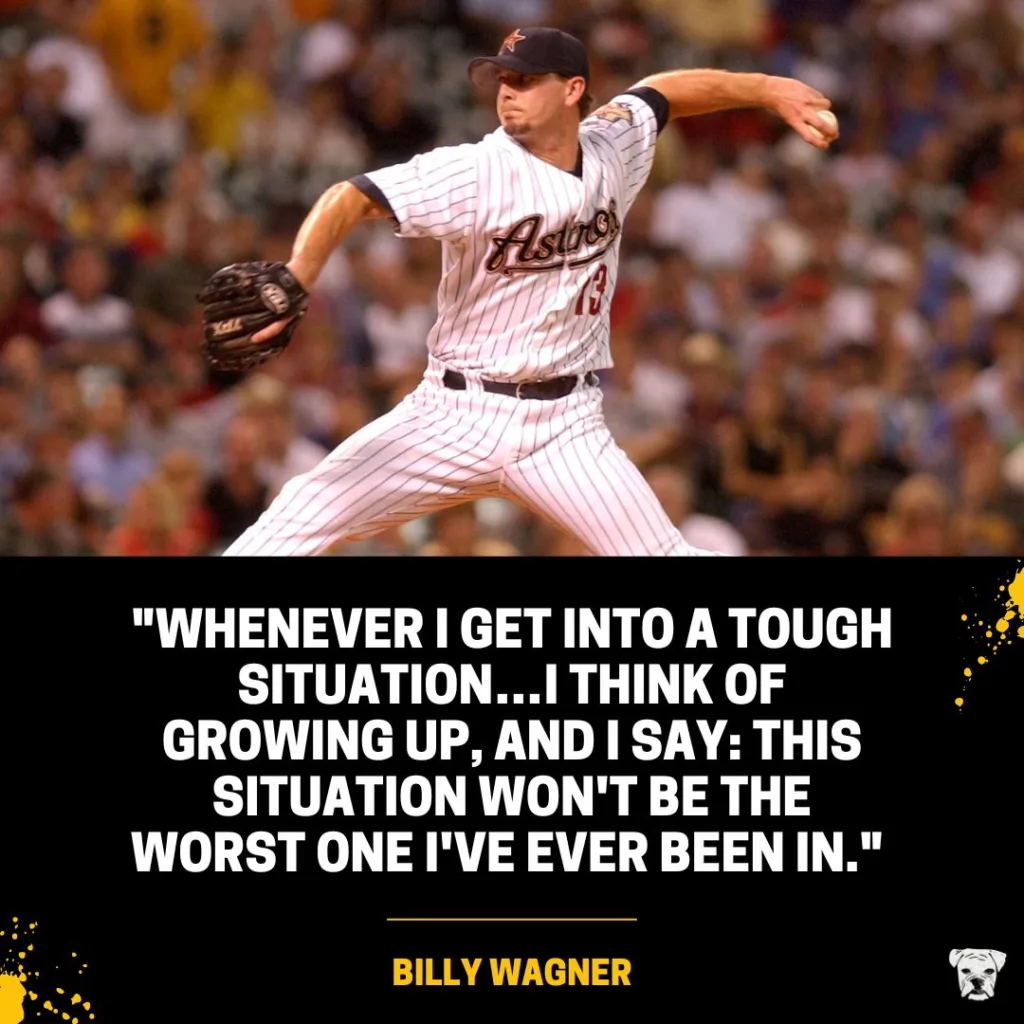
“But if you go through what I went through as a kid, not knowing if I was going to eat or who I was going to live with, this is nothing.”
That mentality carried Billy Wagner through a stellar 16-year MLB career: 1,196 strikeouts, 422 saves, and a minuscule 2.31 ERA.
His Houston teammate, Randy Johnson, once said, “He’s a foot shorter than me, and throws harder than I do.”
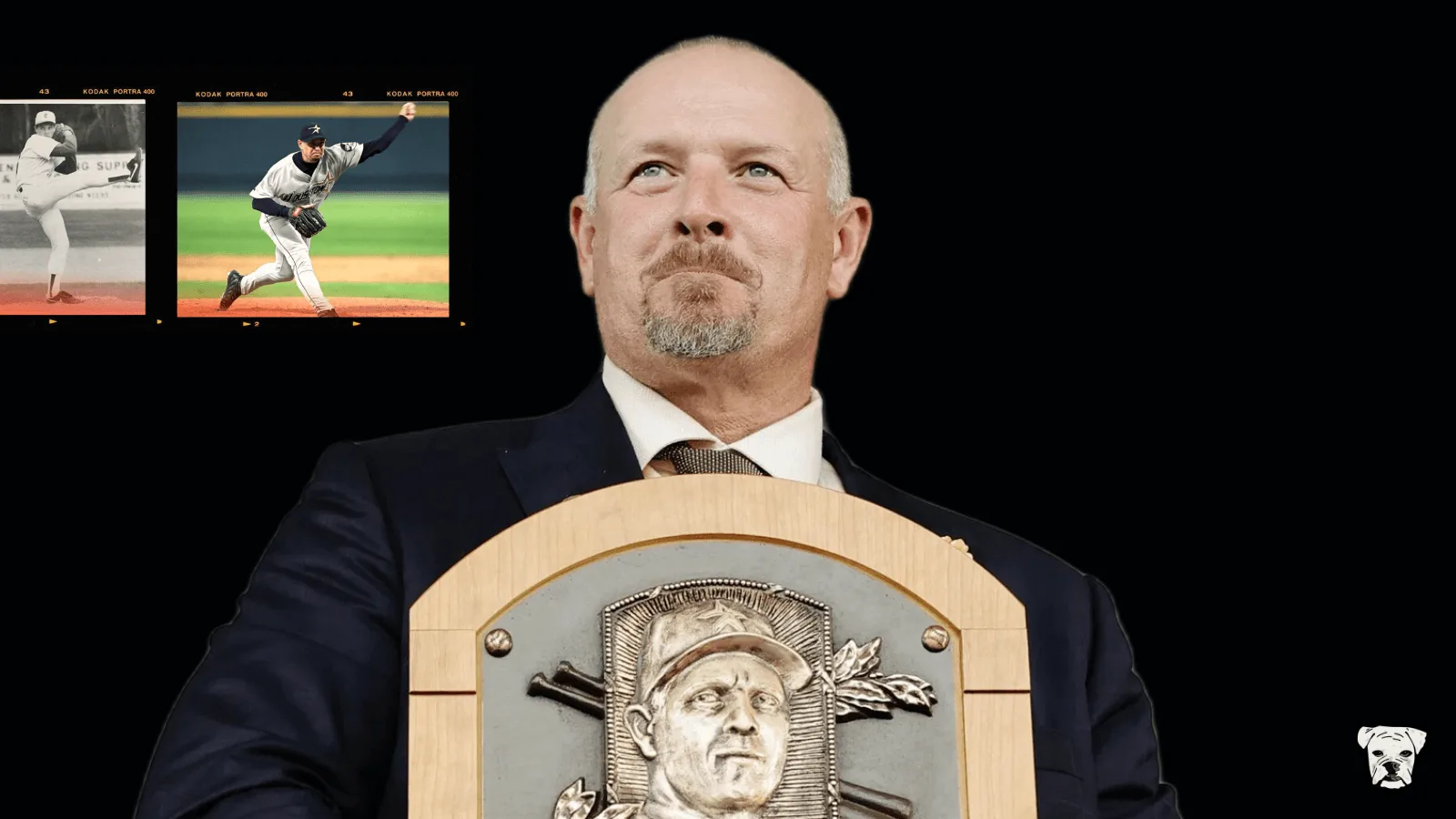
A 7-time All-Star, Wagner will go down as one of the best closers in baseball history. And in his final year on the ballot, he was elected into the Baseball Hall of Fame.
Per SABR, “He rose from 10.5% [of votes] in his first year in 2016 to receive 82.5% and surpass the threshold for induction in 2025.”
A poetic end to an unlikely climb.
“The game has given me so much,” he told MLB Network through teary eyes.
“It’s given me everything that I could possibly have. So, I mean, I’m very grateful.”