“As I got older, it became apparent I wasn’t like everyone else.”
Imagine waking up in a strange new country.
You don’t know anyone, you don’t speak their language, and the person who brought you here abandoned you.
Oh yeah, and you’re 10 years old.
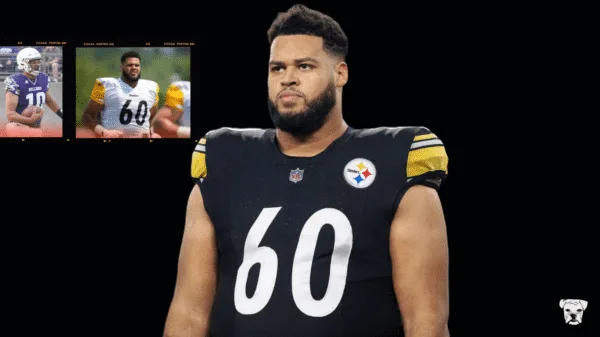
Efe Obada was born and raised in Lagos, Nigeria, before moving with his family to the Netherlands at the age of ten.
That’s when his life became a nightmare.
Obada and his older sister were handed over by their mother (with an undisclosed sum of money) to a woman who’d promised that she would take the kids to England with the intent of providing them a better life.
Their mother was supposed to catch up with them later.
Little did she know that the smuggler would take the money and run, leaving the children to fend for themselves on the streets of London.
They didn’t speak English, and they didn’t know a soul.
“I was brought to England by a stranger who was supposed to look after me and my sister,” Obada said.
“They did not. They abandoned us in the streets of East London and left my sister and I to fend for ourselves.”
While most kids worried about homework, video games, and cartoons, the Obada kids found themselves sleeping on the streets, in abandoned buildings, and in shelters before bouncing around to ten different foster homes.
Yes. Ten.
At one point, the two children ended up living with an unknown woman and her five kids in a three-bedroom apartment for five years.
While the woman’s kids were never given any chores, the Obadas were treated like domestic servants on a daily basis.
“You don’t have any options,” Efe told Tyler Dunne.
“You don’t have any family. You just think everything’s normal. You don’t have anyone to talk to. You don’t have a support system. Your mom can’t come in. Your dad’s not available. You’re just in the situation. I had to be there for myself and my sister.”
Imagine the mental and emotional toll on these two young children of constantly relocating, never really knowing how long they would be at one place, if they were wanted or welcomed, and not having a place to truly call home.
Add in having to deal with school, classmates teasing you for what you didn’t have, struggling with a new language, and having to explain to others why your parents weren’t around.
That was the day-to-day struggle for Efe and his sister growing up.

“It was my life. It was my story. It was what I was going through,” Obada told the BBC.
Aside from his sister, Efe did not have anything in the way of family while growing up in Stockwell and Lambeth.
Social services gave him $44 per week. But because he was an illegal immigrant, he couldn’t get a regular 9-to-5 job.
So he turned to gang life.
Not just to provide for his sister, but also to find community and feel wanted.
When reflecting on his days of stealing and dealing drugs, Efe noted it was more about survival than anything.
“I did these things so I could feed my sister. I did these things because 44 f—— dollars (from social services) wasn’t enough. It’s just the options that were available to me as an illegal immigrant in order to survive the streets of London.”
“There were times I’d steal food just to eat.”
Obada’s chosen path wouldn’t last long, as at the age of 17, he witnessed three of his friends murdered during a gang war.
Despite being pulled into this dangerous underworld, something inside of Efe kept him from getting too deeply involved.
Giving credit to positive influences at local youth centers, he stuck around to finish high school.
Later, he spent a short period enrolled at Kingston University. He wanted to be an architect.
But tuition became too expensive to afford, and his immigration status caused roadblocks.
“Everything I’ve experienced isn’t foreign to a lot of people,” he said.
“A lot of people are illegal. A lot of people are in foster care. A lot of people have no form of support system, so they turn to gang cultures and do horrible things to survive. A lot of people are getting taken advantage of. This is nothing. A lot of people around me were experiencing the same thing, so I didn’t think it wasn’t normal.”
At 21 years old, he took on a security role at Grace Foods in Welwyn Garden City. It was a respectable job that helped provide stability for himself, his sister, and his then-girlfriend.
One day, Efe ran into a friend who was playing for the London Warriors of the BAFA (British American Football Association) National League.
While he’d never played American football, Obada’s size – 6’6” and 250 pounds – made him a compelling prospect.
With little to no understanding of most of the rules, his attitude and determination helped him make an immediate impact on the field.
Then, with just five games under his belt as a defensive end for the Warriors, Obada found himself somewhere totally unexpected.
As it turned out, his defensive coordinator had spent time as an intern with the Dallas Cowboys.
That connection led to a workout with “America’s Team” during their 2014 trip to London.
A few months later, Efe was signing his name on an NFL contract.
Once a kid who was left to roam the streets with his sister, Obada was now headed to the land of the free and home of the brave.
While he never made it past Dallas’s practice squad, the entry-level contract that Obada earned was more money than he had ever dreamed of.
Especially given the fact that he’d only been playing football for a year.
Within 12 months, Obada had been signed, tried out at two different positions, released, signed to the practice squad, released again, and signed twice more by the Cowboys.
He later found an opportunity with the Kansas City Chiefs. But that only lasted three months as a practice squad member.
His time in Atlanta was even shorter.
“I’m literally fighting for my life,” he said about that period.
“I’ve got nothing. I quit my job. I uprooted my whole life. I came to a country I had never been to before.”
Bouncing around from team to team was frustrating, but it at least allowed him to remain in the U.S. – he was only in the country on a work visa.
Other teams expressed interest in Efe during the 2017 offseason before the Carolina Panthers signed him.
There was just one catch.

He was signed to the Panthers’ practice roster as part of the NFL’s updated International Player Pathway Program (IPPP).
Having the security of being on the team for a year allowed him to grasp the ins and outs of the game, rather than just relying on his athletic ability.
After learning the ropes for a season, Efe made history by becoming the first player from the IPPP to make a 53-man roster, making his official NFL debut during the third week of the 2018 regular season.
In true fairytale fashion, Obada helped the Panthers beat the Bengals with a sack and an interception, earning the NFL Player of the Week award.
“When my name did get called, I just knew I had to make the most of it.”
His hard work didn’t go unnoticed by his teammates.
“He took the hard road. He grinded it out,” said teammate Julius Peppers. “I’m just really happy for him. Everybody is showing him a lot of love, and he deserves it.”
Following three seasons with the Panthers, Obada inked a one-year deal with the Buffalo Bills before landing a spot on the Washington Commanders’ roster.
Unfortunately, during his second season in DC, he suffered a season-ending injury with multiple leg fractures in a friendly fire collision with a teammate in Week 3.
“It was horrific,” Efe said.
“While I was getting carted off and I was going to the hospital, I was thinking: ‘OK, my leg is facing a different way. What does this mean?”
But in true Obada fashion, he battled through the adversity of rehab when others would have quietly retired.
He made his return during the 2024 season, appearing in limited action for six games.
With the 2025 season quickly approaching, Obada is sitting on the sidelines as a free agent.
He’s staring into the unknown – playing another year or calling it a career, and turning to coaching or mentoring kids through his camps and charity work.
Whatever the future holds, Obada’s story is proof of how strong the human spirit can be.
“Sometimes you can’t see what you want. It’s so far in the distant future you don’t know how to get there…Every time I get down, I pinch myself and remind myself I’m not supposed to be here.”
“But I am.”
Want more underdog stories? Get a new one delivered to your inbox every Sunday in our free Underdog Newsletter. 25,000 readers love it, and you will too 👇